How to Choose Small Ball Bearings in 2026

Choosing Small Ball Bearings in 2026 means matching the bearing to its real operating conditions, not just selecting a size from a catalog. Start with the shaft diameter, outside diameter, and available width. Then check the expected radial and axial loads, operating speed, and duty cycle. A small bearing in a handheld tool may face brief bursts of high speed, while one in a compact pump may run continuously near moisture or heat. Those details change the choice.

Material matters. Chrome steel is common for general-purpose applications, while stainless steel may suit damp environments; neither option is ideal for every setup. Review the manufacturer’s load ratings, speed limits, clearance, seal type, and lubrication guidance. A rubber-sealed bearing can help keep dust out, but its added friction may matter in a fast-running assembly. Small details matter.

Fit and installation deserve equal attention. A bearing pressed too tightly can run hot, and poor alignment may cause noise or early wear. Confirm tolerances against the shaft and housing drawings, and use the specified mounting method. If the application is critical, ask the supplier to verify the duty conditions rather than relying on a product label alone. A catalog number can look perfect on paper and still disappoint in service. That is easy to miss. This guide explains how to compare specifications, materials, seals, and costs, while leaving room for a practical truth: the best choice often becomes clear only after the operating environment is understood.
How to Choose Small Ball Bearings in 2026

Define the Application and Operating Conditions

A small ball bearing should be chosen for its actual duty, not just its bore diameter. Record radial and axial loads, shaft speed, expected operating hours, and how often the machine starts and stops. A bearing in a handheld tool faces different conditions from one inside a continuously running pump. Small parts, real consequences.

Check the environment closely. Fine dust can enter through a poor seal; water, cleaning chemicals, and temperature swings can affect lubrication and materials. Note whether the shaft is rigid, whether alignment may shift, and whether vibration occurs during operation. Measure, don’t guess. One detail is easy to miss: brief overloads during startup may matter more than a steady running load.

Use load and speed estimates to compare candidate bearings, then verify them against engineering data. ISO 281:2007 defines basic rating life at 90% reliability and models ball-bearing life as roughly proportional to the cube of the dynamic load rating divided by equivalent load. This is an idealized estimate, not a field-life promise; contamination, lubrication, and fit can shorten service life. ISO 15243:2017 provides a framework for classifying bearing damage, useful when reviewing failures from similar equipment. Keep a record of the assumptions. Some will be wrong. That is useful to know before ordering.

Select the Bearing Type and Required Dimensions

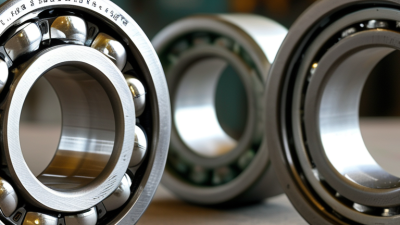
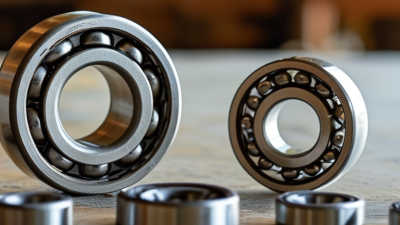
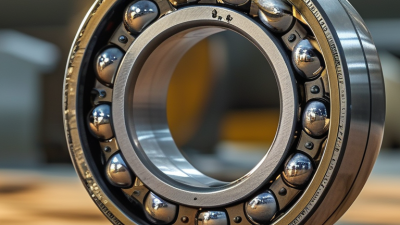
Choosing a small ball bearing starts with the load direction, not the catalog photo. Deep-groove bearings suit mostly radial loads and modest axial loads. Angular-contact types handle combined loads when direction and preload matter. Thrust bearings are designed for axial loads, not ordinary radial support. Small, but critical. Check speed, lubrication, temperature, and available space before settling on a type; a compact housing can make heat removal difficult.

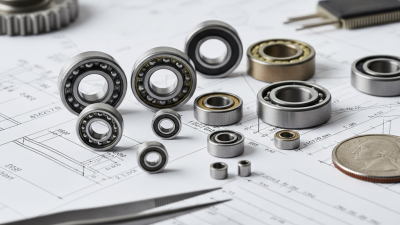
Record the bore, outside diameter, and width, then compare them with the housing and shaft drawings. ISO 15:2017 specifies boundary dimensions for radial bearings, while ISO 492:2023 addresses dimensional and rotational tolerances. Those details matter when a press fit could reduce internal clearance. Measure the shaft and housing seats, too. Nominal dimensions alone can hide a fit problem. This part is easy to overlook.

For load-life screening, ISO 281:2007 defines basic rating life L10 at 90% reliability. For ball bearings, its calculation uses the cube of the dynamic load rating-to-equivalent load ratio. In practical terms, a small increase in load can sharply reduce calculated life. Treat this as a comparison, not a service-life promise: contamination, misalignment, and poor lubrication can change actual results. ISO references: ISO 15:2017; ISO 492:2023; ISO 281:2007.

Compare Materials, Seals, and Lubrication Options

Small ball bearings often look interchangeable on a parts shelf. Their materials can behave quite differently in service. Chrome steel is a common choice for high load capacity and smooth running. Stainless steel resists moisture better, though its load capacity may be lower. Ceramic balls reduce weight and can tolerate some demanding speeds, but they are not automatically the best option. Small details matter. Match the material to the shaft, housing, load, and surrounding conditions, not just the bearing’s outside dimensions.

Seals and shields affect both protection and drag. A metal shield helps keep larger particles out while allowing relatively low friction. Contact seals block finer dust and splashes more effectively, but can add heat at higher speeds. For a dusty mechanism, a sealed bearing may last longer. In a clean, fast-spinning assembly, that extra seal contact may be unnecessary. This is not always a neat choice. Check the actual exposure and speed range rather than assuming tighter protection is always better.

Lubrication deserves equal attention. Grease stays in place and can simplify maintenance; oil may suit higher speeds or help carry heat away. Too much grease can increase friction, especially in a tiny bearing. Too little leaves rolling surfaces vulnerable to wear. Follow the bearing maker’s stated speed and temperature limits, and avoid mixing lubricants without confirming compatibility. A careful fit still matters. A good bearing can run poorly if misalignment or excessive preload creates unwanted heat.

How to Choose Small Ball Bearings in 2026 - Compare Materials, Seals, and Lubrication Options

Selection Dimension Option Typical Characteristics Consider When Trade-offs and Checks
Bearing material High-carbon chromium bearing steel Common choice for precision ball bearings; offers good hardness, fatigue resistance, and load capacity in suitable operating conditions. General-purpose applications where high load capacity and broad availability matter more than resistance to moisture. Can corrode in wet or corrosive environments. Check the specified material, heat treatment, load ratings, and operating conditions.
Bearing material Martensitic stainless steel Provides improved corrosion resistance compared with standard chromium bearing steel, while retaining useful hardness for bearing applications. Equipment exposed to occasional moisture or where corrosion resistance is a priority. Corrosion resistance is not immunity to corrosion. Performance depends on the steel grade, finish, lubricant, and exposure; compare load ratings for the specific bearing.
Bearing material Hybrid ceramic Typically uses silicon nitride balls with steel rings. Ceramic balls are lighter than steel balls and electrically insulating. Applications that benefit from reduced ball mass or electrical isolation through the rolling elements. Usually costs more than all-steel construction. Steel rings remain susceptible to corrosion, and ceramic balls do not make the whole bearing corrosion-proof.
Bearing material Full ceramic Uses ceramic rolling elements and rings; some designs can operate without conventional oil or grease. Specialized applications requiring electrical insulation or resistance to particular corrosive environments. Ceramics are hard but brittle and can be damaged by impact or misalignment. Confirm material compatibility, load limits, and manufacturer guidance.
Sealing Open bearing No integral shields or seals; offers minimal barrier to contamination and no seal contact drag. A clean, enclosed assembly where low running resistance is important and external protection is provided. Requires a suitable surrounding design to keep out dust and moisture and to retain lubricant where needed.
Sealing Metal shields Non-contact shields help limit entry of larger particles and reduce grease escape while generally adding little seal contact. Clean environments where low drag is desired and some protection is needed. Shields are not hermetic seals and offer limited protection against fine dust or liquid ingress. Check shield configuration and clearance.
Sealing Elastomer seals Contact or low-contact designs provide a stronger barrier to contaminants than open bearings or shields. Applications with dust, splash, or a need to retain factory-applied grease. Contact seals can add friction and heat and may limit attainable speed. Seal material and design affect chemical and temperature compatibility.
Lubrication Grease Stays in the bearing more readily than oil and is commonly supplied as a factory fill in sealed bearings. Applications needing convenient, long-term lubrication with limited maintenance or a risk of lubricant leakage. Grease type, fill quantity, temperature range, speed, and compatibility matter. Excess grease can increase running resistance and heat.
Lubrication Oil Can provide effective lubrication and heat removal when supplied appropriately; may be delivered by a bath, mist, or circulation system. Applications with an available oil supply or operating conditions that call for oil lubrication. Requires suitable delivery and retention arrangements. Check viscosity, operating temperature, speed, and compatibility with seals and materials.
Lubrication Dry or solid lubricant Specialized coatings or solid lubricants can be used where conventional oils and greases are unsuitable. Specific environments or processes that restrict liquid lubricants. Not a universal substitute for grease or oil. Confirm load, speed, temperature, atmosphere, and service-life suitability for the selected design.

Selection note: Bearing performance depends on the complete design, including dimensions, internal clearance, precision, load, speed, temperature, fit, and installation. Verify the applicable ratings and operating limits for the specific bearing before selection.

Match Load Capacity, Speed, Precision, and Service Life

How to Choose Small Ball Bearings in 2026

Choose a small bearing for its actual load, shaft speed, fit, and duty cycle—not its outside diameter alone. Record radial and axial forces, peak starts, and expected operating hours. A tiny fan spindle faces different demands from a handpiece exposed to repeated side loads. Small details matter.

For load and service life, ISO 281:2007 defines basic rating life, L10, as the life that 90% of a sufficiently large group of bearings is expected to reach under stated conditions. For ball bearings, the basic relationship is L10 = (C/P)³ million revolutions, where C is dynamic load rating and P is equivalent dynamic load. Treat this as a baseline, not a promise. Contamination, poor lubrication, and misalignment can shorten real service life.

For speed, compare required rpm with the bearing’s limiting speed and thermal conditions. ISO 15312:2018 provides a method for assessing thermal reference speed. Check lubricant, cage design, clearance, and heat escape. Match precision to the shaft and housing; ISO 492:2023 specifies tolerances for radial-bearing dimensions and running accuracy. A tighter grade cannot correct a crooked seat. It may only add cost. Measure assembled-shaft runout and operating temperature during a test run, then reconsider the selection. That step is easy to skip.

Check Standards, Supplier Quality, and 2026 Availability

When choosing small ball bearings in 2026, start with the drawing and operating conditions, not a catalog description. Confirm bore, outside diameter, width, clearance, and tolerance class against the relevant bearing standards. A difference of a few microns can matter in a high-speed spindle. Check whether the standard and its edition match your application and purchasing documents. “Fits” is not always precise enough.

Supplier quality needs evidence you can review. Ask for material and inspection records, lot traceability, and clear acceptance criteria. For a small sample, inspect the raceways under good light and compare measured dimensions with the drawing. Ask how the supplier controls contamination and handles nonconforming parts. A polished certificate is useful, but it does not replace consistent inspection data. I’ve seen buyers overlook packaging; a scratched bearing can fail before installation.

Availability in 2026 should mean more than a website listing. Request current stock, realistic lead times, minimum order quantities, and the production location for the exact specification. Confirm how long quoted availability is valid, especially if demand or shipping conditions change. If a substitute is proposed, compare load ratings, speed limits, sealing, lubrication, and fit before approval. Small parts are easy to underestimate. I would also document one uncertainty: forecast stock can change quickly, and suppliers may not flag that early. Keep a qualified alternative, but test it rather than assuming it is identical.