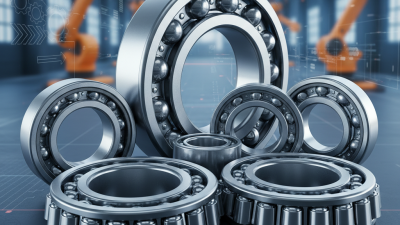
China Top Heavy Duty Bearing Types and Their Applications Explained?
Heavy Duty Bearings play a crucial role in various industries. These bearings are designed to sustain high loads and extreme conditions. They are essential in manufacturing, transportation, and construction sectors. In China, the production of Heavy Duty Bearings is significant due to industrial growth.
These bearings offer distinct advantages. They provide durability and reliability in demanding applications. However, not all Heavy Duty Bearings are created equal. Understanding the types available and their specific applications is vital for optimal performance. Many users overlook this, leading to inefficient operations.
Choosing the right Heavy Duty Bearing requires expertise. Every application has unique demands. Making an ill-informed choice can lead to failures and increased costs. This article explores the different types of Heavy Duty Bearings and their applications. By diving deep into this subject, we can highlight their importance and ensure better decision-making in industrial practices.
Types of Heavy Duty Bearings Commonly Used in China
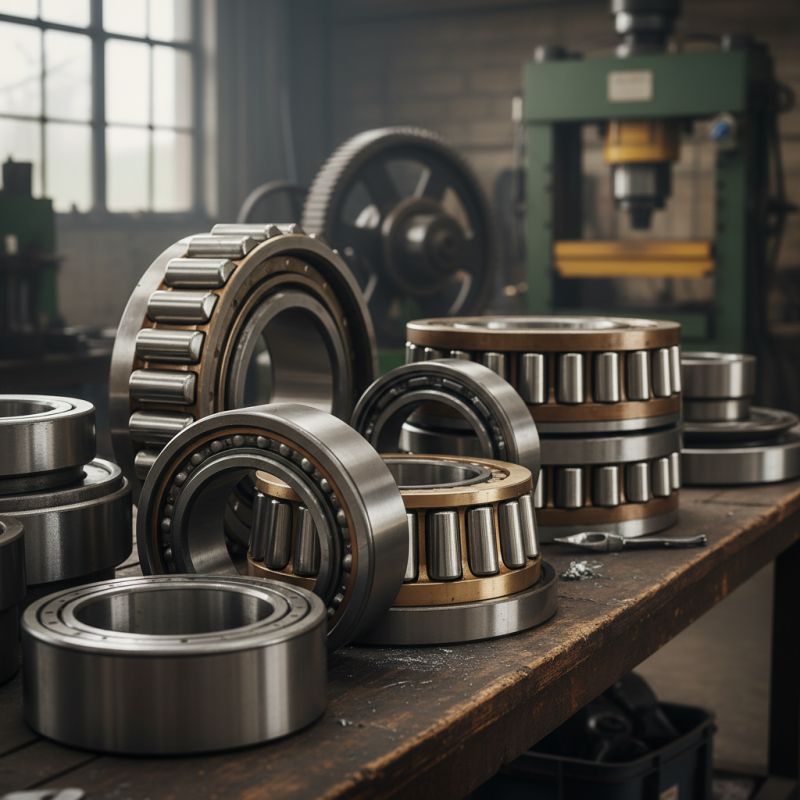
Heavy-duty bearings are essential in various industrial applications across China. They are designed to withstand high loads and tough conditions. Different types of heavy-duty bearings serve specific functions.
Roller bearings, for example, have excellent load-carrying capacity. They are often used in
construction and mining equipment where durability is vital.
Another common type is the
spherical roller bearing. Its design allows it to handle misalignment, making it suitable for agricultural machinery. This adaptability increases operational efficiency. However, selecting the right bearing requires careful consideration. Overloading or improper installation can lead to premature failure. It's crucial to assess the environmental conditions and load requirements.
Thrust bearings also play a significant role in heavy-duty applications. These bearings support axial loads and ensure smooth operation in gearboxes and pumps. Regular maintenance is needed to prolong their lifespan.
Users must remember that not all bearings suit every task. Failing to choose the right type can result in costly downtime and repairs. Understanding these elements is key to making informed decisions in bearing applications.
Key Features of China’s Heavy Duty Bearings Explained
China's heavy-duty bearings play a crucial role in various industrial applications. These bearings are designed to handle substantial loads while ensuring smooth performance. A key feature is their ability to withstand harsh conditions. Many industries rely on these bearings due to their durability and reliability.
One important aspect is the range of materials used in manufacturing. Advanced steel alloys resist wear and tear, enhancing longevity. Heat treatment processes also improve performance under stress. Additionally, specialized designs accommodate specific application needs. Some bearings are optimized for high-speed operation, while others excel in low-speed environments.
Tips for selecting the right bearing include considering the load type and operating conditions. Assessing potential environmental impacts is crucial. Ensure you review manufacturer specifications carefully. It's essential to match the bearing type with your machinery requirements. Remember, using the wrong bearing can lead to premature failure and increased maintenance costs. Keep reviewing your choices for optimal performance.
Top Heavy Duty Bearing Types and Their Applications
This chart illustrates the various types of heavy duty bearings and their applications based on frequency of use. Ball bearings and roller bearings are commonly used due to their versatility, while thrust bearings are specialized for high axial load applications. Ceramic bearings are recognized for their lightweight and resistance to corrosion, and magnetic bearings utilize magnetic levitation for frictionless operation.
Industries Utilizing Heavy Duty Bearings in China
China's heavy-duty bearings play a crucial role across various industries. These industries include agriculture, construction, and mining, where equipment often faces extreme conditions. According to a report by Research and Markets, the heavy-duty bearing market in China is projected to reach over USD 5 billion by 2025, with a significant annual growth rate. This growth reflects the increasing demand for durable and reliable components.
In agriculture, heavy-duty bearings support machinery such as tractors and harvesters. These bearings endure substantial loads and harsh environments. The construction sector also relies on heavy-duty bearings for cranes and excavators. These machines require components that can operate efficiently under stress. The mining industry demands even more resilience. Here, bearings must withstand dust, moisture, and heavy vibration. A study by Technavio indicates that the mining sector's demand for heavy-duty bearings will increase by 6% annually.
However, challenges remain. Not all manufacturers can meet the high standards required for heavy-duty applications. Some products have inconsistencies in quality. This variability can lead to increased maintenance costs and equipment failures. Consequently, companies must carefully assess their suppliers to ensure reliability and durability in their operations. Ultimately, thorough research and stringent quality control are essential for success in utilizing heavy-duty bearings in these demanding industries.
China Top Heavy Duty Bearing Types and Their Applications Explained
| Bearing Type |
Load Capacity (kg) |
Typical Materials |
Common Applications |
| Spherical Roller Bearings |
100,000 |
Steel, Ceramic |
Mining Equipment, Construction Machinery |
| Tapered Roller Bearings |
150,000 |
Chrome Steel |
Trucks, Trailers, Heavy-Duty Machinery |
| Cylindrical Roller Bearings |
120,000 |
Carbon Steel, Alloy Steel |
Industrial Gearboxes, Wind Turbines |
| Angular Contact Ball Bearings |
80,000 |
Stainless Steel |
High-Speed Motors, Pumps |
| Self-Aligning Ball Bearings |
90,000 |
Bronze, Composite Materials |
Agricultural Equipment, Textile Machines |
Applications of Heavy Duty Bearings in Industrial Machinery
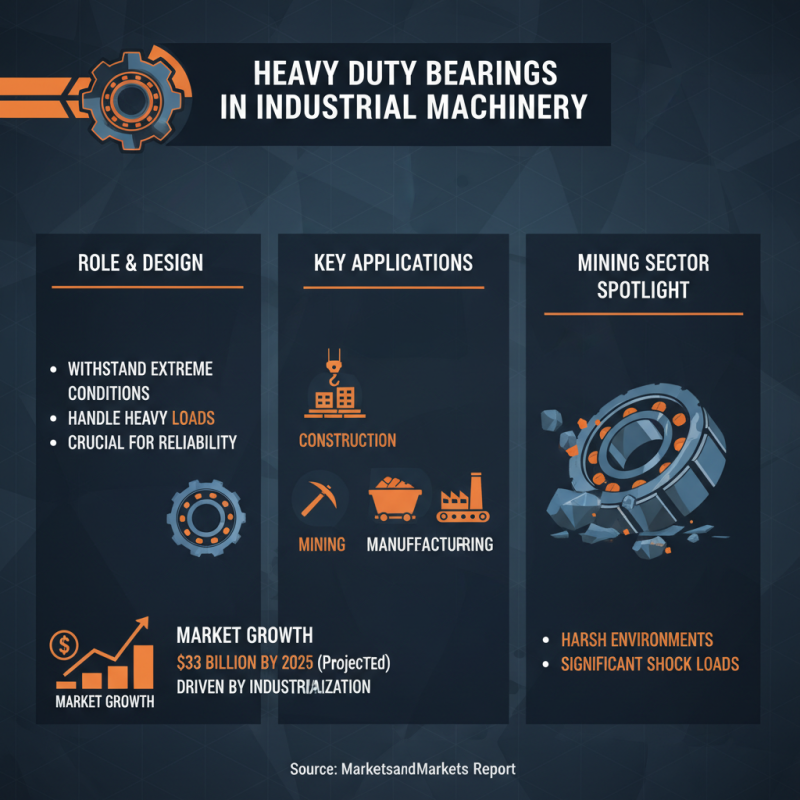
Heavy duty bearings play a crucial role in industrial machinery. They are designed to withstand extreme conditions and heavy loads. These bearings find applications in various sectors such as construction, mining, and manufacturing. For instance, in the mining sector, heavy duty bearings endure harsh environments and significant shock loads. According to a report by MarketsandMarkets, the heavy-duty bearing market is projected to reach approximately $33 billion by 2025, driven by rising industrialization.
In construction machinery, heavy duty bearings facilitate the smooth operation of cranes and excavators. They provide stability and prolong equipment life. Research indicates that inadequate bearing selection can lead to failure and significant downtime, highlighting the need for reliable choices. The World Bearing Association points out that approximately 30% of bearing failures are due to misapplications and design flaws. This underlines the importance of expertise in selecting the right bearing type for specific machinery applications.
Moreover, the automotive industry increasingly utilizes heavy duty bearings in electric vehicles. With the rise of electric motors, the demand for high-performance bearings grows. Precision engineering is essential here, as tolerances are tight. Bearings must operate under diverse conditions, affecting energy efficiency and longevity. As industries evolve, continuous research and innovation in bearing technology remain pivotal to meet the changing demands.
Future Trends in Heavy Duty Bearing Technology in China
The future of heavy-duty bearing technology in China is set to evolve rapidly. As industries demand higher efficiency, manufacturers are turning to advanced materials. These materials enhance durability and reduce wear. This shift is crucial for sectors like construction and agriculture, where machine reliability is vital.
Smart technology integration is another trend. Sensors embedded in bearings offer real-time monitoring. This allows predictive maintenance, reducing downtime. However, the challenges remain. Training personnel to handle this technology will be essential. Additionally, costs may increase as complex components become standard.
China's push for innovation in heavy-duty bearings reflects a global trend. Companies are investing in research and development to stay competitive. This could lead to breakthroughs, but also raise questions about long-term sustainability. Balancing performance with environmental responsibility is a task that will require careful planning.