10 Best Radial Ball Bearing Suppliers Worldwide?
Radial Ball Bearing suppliers support nearly every moving industry, from electric motors and factory conveyors to medical equipment and wind turbines. Their products may look similar on a catalog page, yet performance can differ sharply under heat, dust, vibration, and continuous load. A bearing running inside a compact motor may face thousands of revolutions each minute. Small differences in seal design, steel quality, lubrication, and inspection can affect noise, service life, and maintenance costs.
Industry reports show why supplier selection deserves careful review. The SKF Annual Report 2024 highlights continuing demand for reliable bearing solutions across industrial, automotive, and energy applications. Grand View Research’s Ball Bearing Market Size report also identifies automation, electrification, and industrial machinery as major growth drivers. However, market estimates vary because researchers define product categories and regions differently. That limitation should not be ignored.
This guide examines 10 Best Radial Ball Bearing Suppliers Worldwide through practical purchasing criteria. These include manufacturing scale, quality systems, material control, technical support, customization, delivery capability, and documented application experience. ISO 281 remains a key reference for bearing life calculations, while ISO 9001 certification can indicate structured quality management. Certification alone is not proof of superior performance. Real operating conditions matter more.
A supplier may offer an excellent bearing, but still fail a customer through weak communication or inconsistent lead times. That happens. Therefore, this review combines recognized industry evidence with practical evaluation. Readers should verify current specifications, test samples where possible, and match each bearing to its actual load, speed, temperature, and contamination environment.
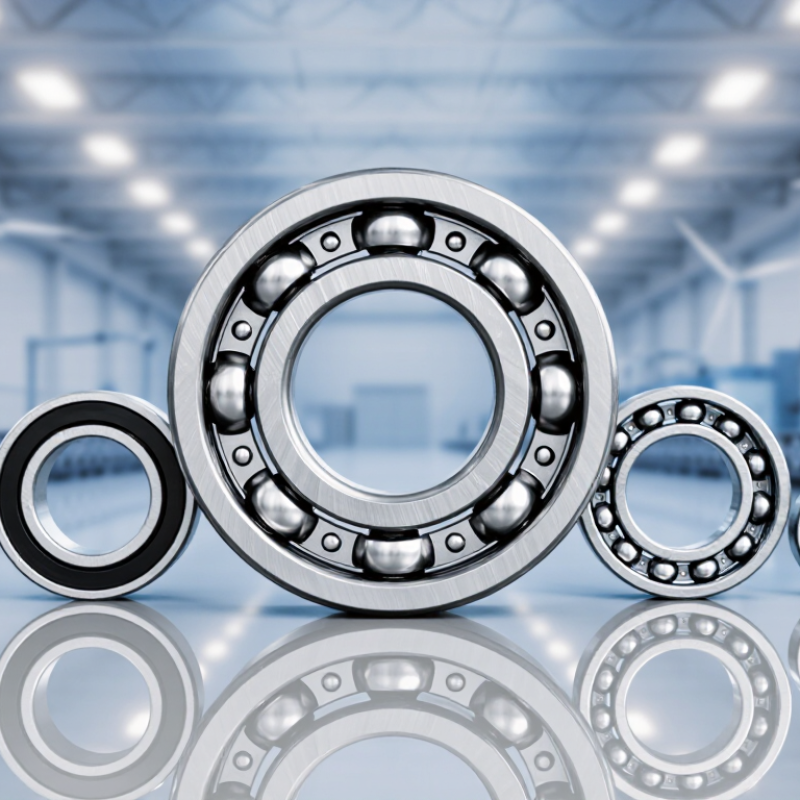
What Are Radial Ball Bearings and Why Supplier Choice Matters
Radial ball bearings support rotating shafts while carrying loads mainly perpendicular to the shaft. They appear in motors, pumps, conveyors, appliances, and precision tools. Their simple geometry hides demanding decisions. Bore size, outside diameter, clearance, load rating, seals, cage material, and operating speed must match the application. A bearing that fits physically may still run hot, vibrate, or fail early. That is why supplier choice matters beyond price.
A capable supplier should provide clear drawings, material details, tolerance data, and verified load calculations. Ask how batches are inspected, lubricated, packed, and traced. Independent test reports can strengthen confidence, especially for high-speed or continuous-duty equipment. Real experience matters too. A supplier who understands shaft alignment, contamination, and mounting practices can prevent problems before delivery. Communication is part of quality; vague answers often signal weak process control. Yet paperwork alone is not proof. Samples should be checked in the actual operating environment when possible.
During evaluation, compare lead times, minimum orders, replacement support, and consistency across production runs. Low prices can become expensive after repeated stoppages. Field reviews may reveal perfect specifications but poor sealing or incorrect clearance. That uncomfortable gap deserves attention. No supplier is flawless, and even a strong vendor may miss a detail. Share duty cycles, temperatures, moisture levels, and maintenance limits openly. Then review performance data after installation, not just after purchase. This habit makes supplier selection more practical and less dependent on impressive claims.
How to Evaluate Radial Ball Bearing Suppliers Worldwide
When comparing the 10 best radial ball bearing suppliers worldwide, begin with measurable evidence, not polished websites. Check manufacturing experience, engineering staff, quality certifications, and documented inspection methods. Ask for material certificates, dimensional reports, and batch traceability. A dependable supplier should explain radial load ratings, internal clearance, sealing options, and operating temperature limits clearly.
Request samples before approving a large order. Measure bore diameter, radial runout, noise, and rotation torque under controlled conditions. Review fatigue-test data and failure-analysis reports. A factory audit can reveal practical details, such as clean assembly areas, calibrated instruments, and protected storage. Shorter lead times are useful, but consistent quality matters more. Packaging should prevent moisture, impact, and contamination during ocean transport.
Compare total cost rather than unit price alone. Include tooling, testing, freight, duties, replacement parts, and downtime risks. Ask for realistic production capacity during peak seasons. Speak with current industrial customers when possible. Their experience may expose communication delays or uneven batches. I once trusted a low quotation without checking packaging standards; the delivered bearings needed extra inspection. That mistake changed my evaluation process.
No scorecard is perfect. Supplier ratings should combine technical proof, delivery history, service response, and financial stability. Clarify warranty terms, change-control procedures, and notification rules before signing an agreement. A supplier that admits limitations may be more reliable than one promising everything. Keep records of every test and conversation. Small details matter.
10 Leading Radial Ball Bearing Suppliers Across Global Markets
The ten leading radial ball bearing suppliers across global markets compete through precision, availability, and application support. A 2024 Fortune Business Insights report valued the global ball bearing market at more than USD 18 billion. It also forecasts continued growth through 2032, driven by automotive, industrial machinery, renewable energy, and automation demand. These figures suggest that supplier scale matters, but scale alone does not guarantee reliable performance.
Strong suppliers usually provide standardized metric and imperial sizes, documented load ratings, and traceable production records. ISO 281 remains important because it defines basic rating life calculations for rolling bearings. Buyers should examine dynamic load ratings, seal design, grease compatibility, noise limits, and operating temperature. A bearing that looks suitable on paper may fail early in dusty factories or high-speed motors. That detail gets missed.
Market reports from Research and Markets also identify Asia-Pacific as a major manufacturing and consumption region. European and North American buyers still expect shorter lead times, technical documentation, and stable quality control. The best ten suppliers therefore maintain regional warehouses, inspection laboratories, and engineering teams. They should also support predictive maintenance through vibration and temperature data. Cheap replacements can create expensive downtime. Sometimes, the lowest quote wins the purchase. It may not win the operating budget. Supplier comparisons should include warranty terms, batch consistency, counterfeit controls, and field-service experience. Forecasts are useful, but real operating evidence deserves greater weight.
Comparing Product Quality, Applications, Pricing, and Support
10 Best Radial Ball Bearing Suppliers Worldwide?
Comparing ten global suppliers requires more than checking catalog size. Product quality appears in steel cleanliness, heat treatment, seal design, and measured runout. Ask for load ratings, noise data, tolerance grades, and inspection records. A bearing for a conveyor may need different protection than one inside a high-speed motor. Some catalogs look impressive. Real performance is harder to judge. I would test sample bearings under heat, vibration, and continuous load before approving a large order.
Tips: Request traceable material certificates and a current quality report. Compare identical sizes, seals, clearances, and lubrication. A cheaper quote may exclude testing, packaging, or replacement support. Confirm whether technical advice comes from trained engineers, not only sales staff.
Pricing should be judged across the full service period. Lower unit costs can become expensive when early wear causes downtime. Compare minimum order quantities, delivery consistency, warranty terms, and spare-part availability. Strong suppliers explain application limits and recommend suitable variants without exaggeration. Their support should include drawings, mounting guidance, failure analysis, and responsive communication. I have found that practical answers often reveal more than polished marketing. Still, supplier claims require independent verification, because even reliable data can miss real operating conditions.
10 Best Radial Ball Bearing Suppliers Worldwide: Comparison Framework
A practical benchmark for comparing suppliers by the factors most relevant to radial ball bearing procurement: product quality, application suitability, pricing competitiveness, and technical support. The weighting reflects a balanced industrial purchasing evaluation rather than a ranking of individual brands.
Product quality receives the highest weighting because bearing life, dimensional accuracy, material consistency, sealing performance, and reliability directly influence total operating cost. Application fit, pricing, and technical support complete the comparison.
How to Choose the Right Radial Ball Bearing Supplier
10 Best Radial Ball Bearing Suppliers Worldwide?
Choosing a radial ball bearing supplier requires more than comparing unit prices. Check manufacturing experience, application knowledge, and documented quality controls. A capable supplier should explain load ratings, speed limits, clearance, sealing options, and lubrication choices in plain language. Vague answers deserve caution.
Ask for material certificates, inspection records, and traceability from batch to shipment. Confirm whether testing covers noise, vibration, dimensional accuracy, and fatigue performance. Review the supplier’s production capacity before placing a large order. A small sample may pass while volume consistency fails. That happens.
Technical support matters during selection. Share shaft size, housing tolerance, operating temperature, speed, radial load, and contamination risks. The supplier should recommend a bearing based on these conditions, not a convenient catalog number. Request samples for actual equipment trials. Measure temperature, sound, and running resistance after installation. Keep records.
Communication speed also reveals operational reliability. Notice how clearly the supplier handles specification changes, nonconformities, packaging concerns, and delivery delays. A strong supplier provides corrective-action reports instead of excuses. Independent audits can add confidence, especially when production occurs overseas. Still, audits are snapshots. Recheck performance periodically, because processes can change after approval. I would also compare warranty terms carefully; generous wording means little without practical response procedures.