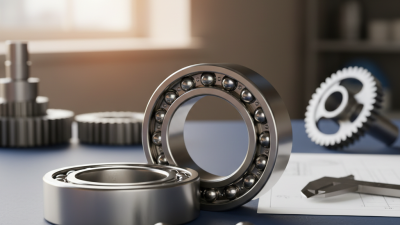
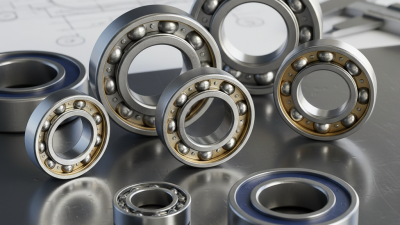
A Radial Deep Groove Ball Bearing is a compact machine element designed to support radial loads while reducing friction between moving parts. Its inner ring, outer ring, balls, and cage work together inside a carefully controlled raceway. In a small electric motor, for example, the bearing helps the shaft rotate smoothly while resisting heat, vibration, and changing loads.
According to bearing engineer and author Tedric A. Harris, “Bearing life depends on load, speed, lubrication, and cleanliness.” This practical statement explains why bearing selection cannot rely on size alone. A bearing may look perfectly suitable on paper, yet fail early when dust enters the seal, grease loses its properties, or installation force damages the raceway. Small details matter.
This guide examines how a Radial Deep Groove Ball Bearing is built, how it carries radial and limited axial loads, and where engineers commonly use it. You will also see how seals, shields, clearance, materials, and lubrication influence performance. The explanation stays practical, not overly theoretical. Look closely at the bearing’s narrow grooves. They guide the balls, distribute contact stress, and support stable rotation.
But the design is not flawless. Excessive misalignment can create uneven loading. Poor maintenance can turn a quiet bearing into a source of noise and costly downtime. That is why understanding operating conditions matters as much as reading a catalogue specification. A reliable choice begins with real loads, real temperatures, and real working environments.
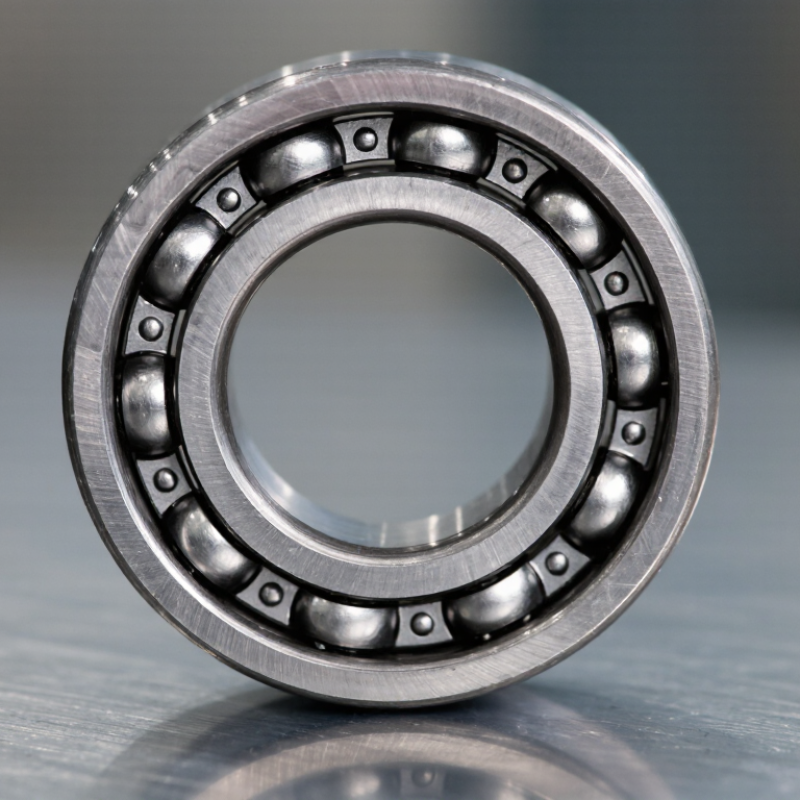
A radial deep groove ball bearing is a mechanical component that supports a rotating shaft. Its inner ring fits around the shaft, while its outer ring sits inside a housing. Hardened balls move between these rings along carefully formed grooves. This design reduces sliding friction and allows smooth, controlled rotation.
The word radial describes the main load direction. Radial loads act perpendicular to the shaft, such as the force created by a belt, gear, or pulley. A deep groove also accepts limited axial loads, which act along the shaft. However, it is not a universal solution. Excessive axial force can shorten its service life.
In practical equipment, the bearing may operate inside a motor, pump, conveyor, or small gearbox. Proper alignment matters. Even a slight shaft offset can create uneven contact, heat, and noise. Lubrication forms a thin film between the rolling surfaces, while seals or shields help limit dust and moisture entry. Clean handling is essential; one small particle can damage the raceway.
A useful inspection checks temperature, vibration, unusual sound, and play. These signs are not always conclusive. I have found that noise alone can mislead maintenance decisions. Load, speed, housing fit, lubrication, and operating temperature must be evaluated together. Selection should follow measured conditions and recognized bearing standards, not appearance alone.
A radial deep groove ball bearing supports rotating shafts while carrying mainly radial loads. Its internal structure is compact, but every part has a defined function. The inner ring fits around the shaft, while the outer ring sits inside the housing. Machined raceways guide the balls and maintain smooth rotation. Hardened steel balls transfer the load between both rings.
A cage keeps the balls evenly spaced and prevents direct ball-to-ball contact. Without it, friction and heat would increase quickly. Many bearings also include shields or seals. Shields reduce contamination entry with minimal contact, while seals provide stronger protection against dust and moisture. Internal clearance allows thermal expansion and slight operating movement. Too little clearance can create heat. Too much may cause vibration and noise.
Tips: Check the raceways for pitting, discoloration, or fine scoring. Apply suitable grease in the correct amount. Excess grease can raise temperature. Confirm the shaft and housing fits before installation. A clean mounting tool matters. Never strike the rings through the balls. In real maintenance work, visual inspection is useful but not perfect. Measuring vibration, temperature, and running noise gives better evidence. The bearing’s service life also depends on alignment, load changes, lubrication quality, and contamination control. Small installation mistakes often become expensive failures.
| Component or Feature | Typical Construction | Internal Structure and Function | Key Technical Characteristics |
|---|---|---|---|
| Inner Ring | Hardened bearing steel; corrosion-resistant steel may be used for special environments. | The inner ring fits around the shaft. Its outer surface contains a precision-ground raceway that guides the balls. | Rotates with the shaft in most applications; transfers radial and limited axial loads through the balls. |
| Outer Ring | Hardened bearing steel with a precision-machined and ground inner raceway. | The outer ring is normally seated in a housing. Its internal raceway forms the outer contact path for the rolling elements. | Provides structural support and maintains the bearing’s external alignment. |
| Deep-Groove Raceways | Continuous circular grooves ground into the inner and outer rings. | The two raceways surround the balls with a deep profile, allowing the bearing to support loads from both radial and axial directions. | The groove curvature, conformity, surface finish, and internal clearance influence load capacity, friction, noise, and service life. |
| Rolling Balls | Precision-grade steel or ceramic balls, depending on the application. | The balls roll between the two raceways and replace sliding motion with rolling contact, reducing friction. | Ball diameter, quantity, roundness, surface finish, and grade affect speed capability, load distribution, and vibration. |
| Cage or Retainer | Commonly stamped steel, machined metal, or molded engineering polymer. | The cage separates the balls evenly around the circumference and prevents direct ball-to-ball contact during operation. | Cage design affects lubricant distribution, operating speed, temperature resistance, noise, and vibration behavior. |
| Shields | Thin, non-contact metal discs mounted near the ring shoulders. | Shields reduce the entry of large contaminants while creating very little additional friction because they normally do not contact the rotating ring. | Suitable for relatively clean environments; they offer less contamination protection than contacting seals. |
| Seals | Elastomer sealing lips supported by metal reinforcement or molded sealing elements. | Seals contact a mating surface to retain grease and block dust, moisture, and other contaminants from entering the raceway. | Improves contamination resistance but generally adds friction, heat generation, and torque compared with open or shielded designs. |
| Lubricant | Grease or oil formulated for the required speed, temperature, load, and environment. | Lubricant forms a separating film between the balls and raceways, reducing wear, friction, and heat generation. | Incorrect quantity, contamination, degradation, or incompatible lubricant can significantly shorten bearing life. |
| Internal Clearance | The specified free movement between the rings and rolling elements before mounting. | Clearance allows space for thermal expansion and mounting interference. It decreases when the bearing is fitted onto a shaft or into a housing. | Too little clearance can cause overheating and premature failure; too much can increase vibration, noise, and load concentration. |
| Radial Load Capacity | Load capability determined by ring size, ball size, number of balls, material, and raceway geometry. | A radial load acts approximately perpendicular to the shaft axis and is distributed through several balls in the loaded zone. | Deep-groove bearings are primarily radial bearings and generally tolerate moderate axial loads in either direction. |
| Axial Load Capability | Enabled by the deep, continuous raceway geometry. | An axial load acts parallel to the shaft axis. The deep raceways keep the balls constrained while carrying thrust in both directions. | Axial capacity is lower than the radial capacity and depends strongly on the magnitude of the combined load and the contact conditions. |
| Contact Angle | The angle formed by the load-transmission line through a ball and the radial plane. | Under primarily radial loading, the contact angle is relatively small. Axial loading changes the load distribution and can increase the effective contact angle. | Affects the balance between radial and axial load support, friction, stiffness, and operating behavior. |
A radial deep groove ball bearing supports radial loads while allowing a shaft to rotate with low resistance. Its inner ring turns with the shaft, while the outer ring stays seated in the housing. Hardened balls roll through deep, continuous raceway grooves. A cage keeps them evenly spaced.
The geometry explains its operation. When radial force enters the bearing, the load spreads across several balls near the lower raceway. Each ball moves in two ways: it orbits the bearing center and spins on its own axis. Grease forms a thin film between the rolling surfaces. Too little lubricant increases metal contact and heat. Too much can also raise temperature.
ISO 281:2007 calculates basic rating life with L10 = (C/P)³ for ball bearings, measured in millions of revolutions. C represents dynamic load capacity, while P represents equivalent operating load. A 10-million-revolution rating does not promise failure at that point; it means 90% of identical bearings may reach it under controlled conditions. Real assemblies are less tidy. Misalignment, contamination, poor fits, and vibration can shorten life sharply. A 2023 industry reliability review from the European Committee for Standardization also stresses cleanliness and correct lubrication as major control factors. In practice, a technician may hear a faint rumble before temperature rises. That small sound deserves attention.
What Is a Radial Deep Groove Ball Bearing?
Types, Sizes, and Performance Specifications
A radial deep groove ball bearing supports rotating shafts and mainly carries radial loads. Its deep raceway can also handle moderate axial loads in both directions. Common types include open, shielded, and sealed designs. Open bearings suit clean, controlled environments. Shielded versions reduce dust entry while limiting friction. Sealed versions retain grease better, especially in damp or dirty equipment. Ceramic or stainless-steel options may help with corrosion, electrical insulation, or high-speed operation, but their benefits depend on the application.
Size selection begins with the bore diameter, outside diameter, and bearing width. These dimensions must match the shaft and housing precisely. Performance specifications include dynamic load rating, static load rating, limiting speed, internal clearance, and temperature range. A higher load rating usually supports longer service life. However, excessive speed, poor alignment, or insufficient lubrication can still cause early failure. Seemingly minor installation pressure can damage the raceway.
Tips: Measure the shaft and housing before ordering. Check the actual radial and axial loads. Consider dust, moisture, heat, and vibration. Choose a suitable clearance, not simply the largest one. A sealed bearing often reduces maintenance, but it may create more friction at high speed. When operating conditions are uncertain, testing under real load is wiser than relying only on a catalog calculation. Certainty is not always possible.
Radial deep groove ball bearings are single-row bearings designed primarily for radial loads, while also supporting moderate axial loads in both directions. Their performance depends on bearing size, internal geometry, speed, lubrication, and operating conditions.
| Bearing Series | Bore d (mm) | Outside Diameter D (mm) | Width B (mm) | Dynamic Load Rating C (kN) | Static Load Rating C₀ (kN) |
|---|---|---|---|---|---|
| 6000 | 10 | 26 | 8 | 4.55 | 1.96 |
| 6200 | 10 | 30 | 9 | 7.65 | 3.45 |
| 6300 | 10 | 35 | 11 | 10.8 | 5.1 |
| 6400 | 10 | 42 | 12 | 15.8 | 7.35 |
The chart compares representative load ratings for common open metric deep groove ball bearing sizes. Dynamic load rating relates to fatigue life under rotating load, while static load rating relates to permanent deformation risk when the bearing is stationary or subjected to shock loads. Actual values may vary by bearing design, clearance, seal configuration, and manufacturing specification.
A radial deep groove ball bearing carries radial loads through rolling balls between inner and outer raceways. It can also handle moderate axial loads in both directions. Its simple structure suits electric motors, pumps, fans, conveyors, gearboxes, and household equipment. In a small motor, the bearing may rotate thousands of times per minute while supporting a shaft only a few millimeters wide.
Application conditions should guide the selection. Check the shaft diameter, housing bore, available width, and required load capacity. Speed matters, too. A bearing designed for steady rotation may perform poorly under frequent starts and stops. Seals help block dust and moisture, while shields usually create less friction. The choice depends on the actual environment.
Temperature, lubricant, vibration, and mounting accuracy also deserve attention. Excessive interference can reduce internal clearance and raise operating heat. Too much clearance may increase noise and vibration. Contamination remains a common failure cause, even in clean-looking workshops.
I would not select a bearing by bore size alone. That shortcut feels efficient, but it often ignores load direction and service conditions. When misalignment is likely, a standard deep groove design may not be the best answer. Engineers should compare calculated loads with real operating patterns, then verify the fit during installation. Small details matter.