2026 Top Precision Ball Bearings Suppliers for Buyers?

Choosing among the 2026 Top Precision Ball Bearings Suppliers for Buyers takes more than comparing catalog prices. A bearing may look identical on a product page, yet differ in tolerance, steel quality, lubrication, noise levels, and documented inspection. Small differences matter. Under steady speed, a bearing can run quietly for months; under shock loads or poor alignment, the same specification may disappoint. Buyers should match each supplier’s capabilities to the shaft, operating temperature, load, speed, and maintenance plan.

Tribology pioneer Peter Jost described tribology as “the science and technology of interacting surfaces in relative motion and of related subjects and practices.” That principle applies directly to Precision Ball Bearings: performance depends on how components work together, not just on a supplier’s headline claims. For a sound comparison, examine technical data sheets, quality controls, material traceability, sample-testing options, delivery capacity, and technical support. Ask how tolerances are verified and how changes to materials or manufacturing are communicated. Request evidence, not just assurances.

A shortlist is only a starting point. Some buyers may prioritize rapid delivery; others need custom designs, stable repeat production, or close engineering support. There is no universal winner. This guide introduces supplier-selection criteria and notable providers for 2026, while encouraging buyers to verify current specifications and capabilities directly. One caution remains: published information rarely reveals every production detail. Check carefully. A sensible decision weighs documented performance against real operating conditions—and leaves room to revise assumptions when test results say otherwise.
2026 Top Precision Ball Bearings Suppliers for Buyers?

What Precision Ball Bearings Are and How They Are Used

2026 Top Precision Ball Bearings Suppliers for Buyers?

What Precision Ball Bearings Are and How They Are Used

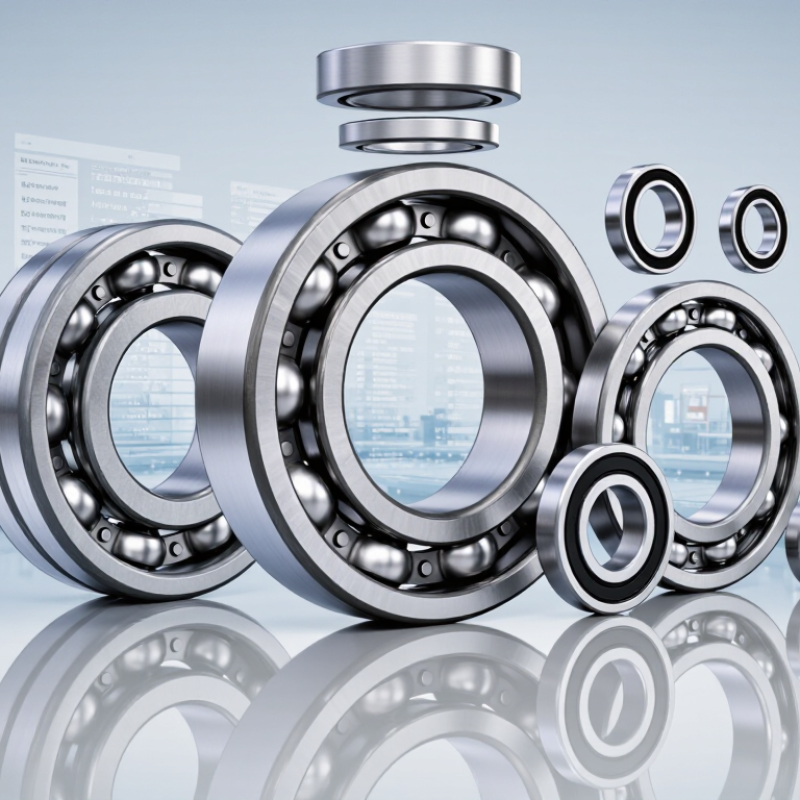
Precision ball bearings support rotating shafts while reducing friction between moving surfaces. Inner and outer rings guide hardened balls, while a cage keeps them spaced. Deep-groove bearings suit electric motors and pumps; angular-contact designs handle combined radial and axial loads in machine-tool spindles. You can picture the difference at a spindle: tiny runout may show up as chatter on a finished metal surface. Small parts. Big consequences.

Precision is not simply a tight tolerance on a datasheet. Buyers should match speed, load, temperature, lubrication, sealing, and fit to the actual machine. The U.S. Department of Energy’s 2014 motor-systems sourcebook reports that motor-driven systems use about 68% of electricity in U.S. manufacturing. That figure is not a bearing-efficiency estimate, but it shows why reducing avoidable friction and downtime matters. ISO 281 provides a method for calculating bearing rating life; its basic L10 life corresponds to 90% reliability under stated operating conditions. Real contamination, poor alignment, or weak lubrication can still shorten service life.

Tips: Check shaft and housing tolerances before ordering, and ask for traceable inspection data. Keep dust out during installation; one gritty fingerprint can undermine careful assembly. I’d also review the duty cycle, not just the peak load. A specification can look perfect and still miss the machine’s real operating pattern.

Key Specifications Buyers Should Define in 2026

For precision ball bearings, define the application before comparing suppliers. Specify bore, outside diameter, width, and permissible dimensional variation. State the required radial and axial loads, operating speed, and expected duty cycle. Small differences matter. A bearing running continuously at high speed may need tighter runout limits than one used intermittently.

Set measurable targets for accuracy, noise, vibration, and temperature rise. Describe the shaft and housing fits, too; a precise bearing can perform poorly in a misaligned assembly. Identify material requirements, cage type, lubrication method, and whether relubrication is practical. Give suppliers the actual operating temperature and exposure to dust or moisture. “Clean environment” is vague. A workshop with fine grinding dust is not clean enough for every design.

Ask for inspection records, lot traceability, and the measurement method behind each tolerance claim. Confirm how samples will be tested under representative loads, not just at room temperature on a bench. I have seen specification sheets that looked complete but omitted mounting conditions. That gap can distort comparisons. Avoid requesting the tightest available tolerance by default; it may add cost without improving the finished machine. Set priorities, then review any trade-offs with an engineer familiar with the assembly.

Types of Suppliers Serving the Precision Bearing Market

Precision bearing suppliers generally fall into three groups: specialist manufacturers, industrial distributors, and engineering-led sourcing partners. Each serves a different buying need. A manufacturer may offer closer control over internal geometry, materials, heat treatment, and inspection. Buyers should ask for documented runout, clearance, load ratings, and lot traceability—not just a catalog tolerance. Details matter.

Engineering-led suppliers may help with bearing selection, custom dimensions, lubrication, or fit calculations. This can be useful when a spindle runs at high speed or a machine faces repeated temperature changes. But technical support varies. Ask who checks the application assumptions and what data informs the recommendation. A confident answer is not proof.

Distributors typically provide access to multiple bearing types and can help with availability, consolidated orders, and replacement parts. Some also offer inspection or application assistance; others focus mainly on fulfillment. A polished catalog is not enough. Request material certificates, inspection records, and clear delivery terms where the application warrants them. Compare suppliers against actual operating conditions, including shaft fit, contamination, speed, and maintenance access. The best fit may not be the supplier with the broadest range; it may be the one that can explain its limits plainly.

How to Compare Leading Precision Ball Bearing Suppliers

When comparing leading precision ball bearing suppliers, look beyond catalog dimensions and quoted prices. Start with the application: shaft speed, radial and axial loads, operating temperature, lubrication, and expected service life. Ask for tolerance data, material specifications, inspection methods, and relevant test records. A capable supplier should explain how bearing clearance, runout, and surface finish affect your assembly. Consistency matters. Check whether sample measurements match the stated tolerances, and ask how production batches are monitored. A polished brochure can still leave important gaps.

Tips: Share a real operating profile, not just a bearing number. Request a sample inspection report and clarify what each measurement covers. Check lead times, packaging, and technical response times. Ask how nonconforming parts are handled. Small details matter.

Compare suppliers using the same requirements and questions. This makes differences easier to judge and helps prevent a low initial price from hiding costly delays or fit problems. Review communication quality, too: clear answers about limits and trade-offs are often more useful than broad promises. If a specification is unclear, pause and verify it. Buyers sometimes focus heavily on precision ratings, while overlooking installation conditions or lubrication. That is an easy mistake, and it can distort the comparison.

2026 Top Precision Ball Bearings Suppliers for Buyers? - How to Compare Leading Precision Ball Bearing Suppliers

Comparison dimension What to request from each supplier Reference or unit How buyers can compare
Dimensional accuracy Declared tolerance class for the exact bearing type and size, with inspection results for critical dimensions. ISO 492; commonly specified classes include P0, P6, P5, P4 and P2. Compare the same bearing configuration and class. Higher precision classes generally impose tighter tolerances; confirm the applicable limits for the specific product.
Internal clearance Specified clearance group and measurement method, including any required operating-condition guidance. Radial clearance groups such as C2, Normal (CN), C3, C4 and C5; applicable product standards and measurement conditions should be stated. Check that the proposed clearance suits fits, temperature and operating conditions. A larger clearance is not automatically better.
Material and heat treatment Steel grade, heat-treatment route, hardness range, and traceability documents for the supplied lot. Grade designation and hardness in HRC or another stated scale; values depend on material and bearing design. Compare documented specifications and lot-level records against the application requirements rather than relying on a generic “bearing steel” claim.
Running accuracy and noise Runout results and, where relevant, vibration or noise test results with test conditions and acceptance limits. Runout in µm; vibration or noise measured using a stated method and instrument setting. Compare results only when bearing size, test method, setup and acceptance criteria are equivalent.
Load and life data Basic dynamic and static load ratings, plus the assumptions behind any calculated life estimate. Dynamic rating C and static rating C₀ in kN; rating life calculation per ISO 281. Verify the exact bearing designation and calculation inputs. Calculated rating life is not a guaranteed service-life figure.
Lubrication and sealing Grease or oil specification, fill quantity where applicable, seal or shield configuration, and permitted operating conditions. Lubricant type, operating temperature range and configuration code as stated in the product documentation. Match the lubricant and enclosure to speed, temperature, contamination exposure and maintenance plan.
Quality management and traceability Current quality-management certificate, scope, inspection plan, and sample material or inspection records. Certificate standard and validity; lot, batch or serial traceability fields. Check certificate scope and validity independently, and confirm that traceability applies to the quoted product and production site.
Delivery and capacity Quoted lead time, available quantity, monthly capacity, shipment location and whether stock is confirmed. Calendar days or weeks; quantity per order or month. Compare like-for-like order quantities and delivery terms. Treat lead time as quote-specific, not as a fixed supplier-wide value.
Customization and sampling Available options for dimensions, cages, seals, lubrication and packaging; prototype cost and sample schedule. Drawing revision, sample quantity, tooling cost and quoted sample lead time. Confirm design ownership, approval workflow and whether production parts will match the approved sample and drawing revision.
Commercial terms and support Unit price by order quantity, minimum order quantity, payment and delivery terms, warranty conditions, and technical response process. Currency and Incoterms® rule; stated response or claim-handling time. Compare total landed cost and written terms, not unit price alone. Request the same quotation basis from every supplier.

Note: This is a supplier-evaluation framework, not a ranking of named manufacturers. Confirm all product-specific specifications, certificates, test methods and commercial terms in current supplier documentation.

Quality, Certification, and Supply Factors to Verify Before Buying

2026 Top Precision Ball Bearings Suppliers for Buyers?

Before buying, verify the supplier’s quality system and the bearing’s documented specifications. Ask for inspection records covering dimensions, runout, noise, and material traceability. ISO 492 defines tolerance classes for radial bearings; confirm the quoted class matches your shaft, housing, and operating speed. A certificate alone is not proof that every delivered lot was inspected. Request a sample report tied to the actual batch.

Check lubrication, sealing, temperature limits, and load ratings against your equipment’s duty cycle. The U.S. Department of Energy’s Operations & Maintenance Best Practices Guide reports predictive maintenance savings of 8–12% compared with preventive maintenance. That is a general maintenance benchmark, not a bearing-specific guarantee. Still, it shows why reliable technical data and after-sales support can affect total operating costs. Lead time matters, too. Verify stock, production capacity, and how the supplier handles delayed shipments.

Tips: Send suppliers the same drawing and operating conditions, then compare their replies line by line. Ask how they control batch variation and manage nonconforming parts. Keep the response. Small inconsistencies may reveal gaps. And one reminder: paperwork can look convincing while leaving practical questions unanswered. A trial order may expose issues that a certificate cannot.

2026 Precision Ball Bearing Supplier Checklist

Suggested allocation of buyer review effort across key verification areas

These percentages are a suggested checklist allocation, not supplier ratings or market statistics. Verify bearing specifications, applicable certificates, inspection records, traceability, and delivery capability against your application and purchasing requirements.