Choosing the right Radial Ball Bearing can determine whether a machine runs smoothly or fails under pressure. In practical maintenance work, small bearing mistakes often create large repair costs. A bearing may look suitable on paper, yet produce noise, heat, or vibration after installation. That difference matters.
This guide presents seven practical tips for making a more reliable choice. It considers load direction, speed, operating temperature, lubrication, sealing, material, and installation conditions. A bearing supporting a conveyor shaft needs different qualities from one inside a high-speed electric motor. Even a dusty workshop can change the best option. Details matter.
Experience shows that catalog ratings are only part of the decision. Dynamic load ratings, clearance, corrosion resistance, and expected service life must match the real application. It is also important to check shaft dimensions and housing tolerances before ordering. That step is often missed. Manufacturers’ specifications and recognized engineering standards should guide the final selection, not assumptions or the lowest price.
Still, no selection method is perfect. Operating conditions can change, and maintenance records may be incomplete. A careful engineer leaves room for inspection and later adjustment. Listen for unusual sounds. Check running temperature. Review lubrication intervals. These simple observations can reveal problems early. With a structured approach, the right Radial Ball Bearing can improve efficiency, reduce downtime, and support safer, more dependable equipment performance.
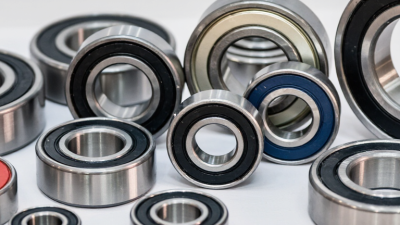
Choosing a radial ball bearing begins with the machine, not the catalog. Tip: Identify the bearing type before comparing prices. Deep-groove bearings suit combined radial and moderate axial loads. Angular-contact types handle stronger axial forces. Shielded bearings reduce dust entry, while sealed bearings retain grease better. The wrong choice can create heat, noise, and early wear.
Tip: Record the application requirements. Measure shaft diameter, housing space, radial load, axial load, speed, and temperature. Tip: Check the load direction during startup, not only normal operation. ISO 281 calculates basic rating life from load and speed, but it does not fully predict contamination or poor lubrication. Tip: Review ISO 15243 damage categories when replacing a failed bearing. A damaged raceway may reveal misalignment rather than a defective bearing.
Tip: Match the cage and clearance to the operating temperature. Tip: Confirm grease compatibility and relubrication intervals. The U.S. Department of Energy reports that motor-driven systems consume about 70% of industrial electricity, so small friction losses can matter across thousands of operating hours. Tip: Inspect the shaft and housing fits with calibrated tools. Tip: Keep installation records, including mounting force and vibration readings. In practice, a clean spreadsheet can still mislead. I have seen correct load calculations fail because washdown water entered through a damaged seal. Recheck the environment. That step is easy to skip.
Start by matching the bearing type to the application’s radial load, axial load, speed, available space, sealing needs, alignment conditions, lubrication, and operating environment. The chart compares the standardized boundary dimensions of common 6000-series deep-groove radial ball bearings. All dimensions are nominal millimetres.
A smaller bearing can save space, while a larger bearing generally provides more room for rolling elements and may support higher loads. Confirm the required load rating, limiting speed, clearance, seal configuration, fit, and operating temperature before making the final selection.
7 Tips for Choosing the Right Radial Ball Bearing
Match Load Capacity with Radial and Axial Forces
A radial ball bearing is not chosen by bore size alone. Its load capacity must match the forces acting on the shaft. Radial force presses perpendicular to the shaft. Axial force pushes along it. A small conveyor roller may carry steady radial weight, while a pump shaft can face both forces during start-up.
Measure real operating loads, not only expected averages. Include belt tension, gear forces, shaft weight, acceleration, and sudden stops. Compare the calculated radial load with the bearing’s dynamic load rating. Check the static rating when shock, vibration, or slow movement could create permanent dents. The numbers matter.
Do not ignore axial force.
Many radial bearings accept limited axial loading, but their capacity depends on direction, speed, clearance, and lubrication. A bearing exposed to constant thrust may run hot, even when radial loading looks acceptable. I have seen calculations fail because the designer used a normal operating load and forgot assembly pressure. That mistake can shorten service life quickly.
Check the manufacturer’s technical data and use the combined-load formula when necessary. Keep the load path aligned with the bearing seats. Misalignment adds pressure to a few balls instead of distributing it evenly. A clean installation also matters; fine dust can damage raceways before visible wear appears. My own calculations are sometimes too tidy. Field measurements deserve equal respect.
| Tip | Selection Check | Illustrative Operating Data | What the Data Indicates | Suitable Radial Bearing Direction | Practical Action |
|---|---|---|---|---|---|
| 1 | Separate radial and axial forces Do not treat the total load as radial unless the axial component is negligible. |
Radial force, Fr = 1.20 kN Axial force, Fa = 0.15 kN Fa/Fr = 0.125 |
The radial load is dominant, but the axial load still contributes to the equivalent dynamic bearing load. | Deep-groove ball bearing | Use the manufacturer’s equivalent-load factors, X and Y, rather than selecting by Fr alone. |
| 2 | Check the axial-to-radial load ratio Higher axial loading may require a different bearing arrangement. |
Fr = 2.00 kN Fa = 0.80 kN Fa/Fr = 0.400 |
A substantial axial component can reduce the allowable radial-load capacity of a single radial bearing. | Angular-contact arrangement | Evaluate paired angular-contact bearings or another locating arrangement when axial direction and magnitude are significant. |
| 3 | Match dynamic load rating to required life Use the basic rating-life relationship for ball bearings. |
Basic rating life: L10 = (C/P)3 Required life: 20,000 h Speed: 1,800 r/min |
At 1,800 r/min, 20,000 operating hours correspond to approximately 2.16 × 10⁹ revolutions. | Select by calculated C/P ratio | Calculate P from Fr and Fa, then choose a bearing with sufficient dynamic rating C. Apply reliability and operating-condition adjustments when required. |
| 4 | Check static load safety Prevent permanent raceway or rolling-element deformation during shock or stationary loading. |
Static equivalent load: P0 = 3.00 kN Recommended screening factor: s0 = 1.5 Required static rating: C0 ≥ 4.50 kN |
The screening requirement is calculated as C0 ≥ s0 × P0. Shock loads may require a higher factor. | Higher C0 option | Use the peak or stationary load—not only the average load—when checking C0 and the static safety factor. |
| 5 | Verify speed and lubrication limits Load capacity alone does not determine suitability at high speed. |
Operating speed: 3,600 r/min Temperature: 80 °C Load: Fr = 0.60 kN, Fa = 0.10 kN |
Low load does not eliminate risks from heat generation, lubricant selection, cage limits, or insufficient preload control. | High-speed configuration | Compare reference speed, limiting speed, lubricant viscosity, sealing friction, and cooling conditions before final selection. |
| 6 | Account for load direction and bearing arrangement Determine whether the bearing must locate the shaft axially or allow axial displacement. |
Radial load: 1.50 kN Reversible axial load: ±0.40 kN Shaft thermal expansion: 0.30 mm |
A fixed bearing may carry axial location, while a floating bearing arrangement can accommodate thermal expansion. | Locating plus non-locating pair | Define the locating bearing, floating bearing, fits, and axial clearance so thermal growth does not create unintended preload. |
| 7 | Consider contamination, sealing, and installation Service conditions can dominate calculated fatigue life. |
Dust exposure: Moderate Water exposure: Occasional Required relubrication interval: 4,000 h |
Contamination, incorrect fits, misalignment, and poor lubrication can cause early failure even when C and C0 are adequate. | Sealed or shielded option | Specify sealing, lubricant, shaft and housing tolerances, cleanliness, alignment limits, and correct mounting tools. |
Choose the material for the environment, not only the load. Hardened bearing steel suits most clean, moderate-temperature machines. Stainless steel helps resist moisture, but it may offer lower load capacity. Ceramic rolling elements reduce electrical erosion risks in some motor applications.
ISO 15243:2017 identifies six main damage groups, including fatigue, wear, corrosion, and electrical erosion. That classification is useful during failure reviews. It is not a substitute for inspection.
Select seals with equal care. Contact seals block dust and water more effectively, but they create additional friction and heat. Metal shields usually run more freely, yet they provide weaker contamination protection.
In dusty workshops, a sealed bearing may last longer than a theoretically faster shielded design. Check the actual shaft speed and temperature. Small oversights matter.
A clean assembly still needs correct fits, alignment, and handling.
Lubrication should match the bearing and duty cycle. Use the specified grease consistency, base oil viscosity, and operating-temperature range. Never mix greases without confirming compatibility.
ISO 281:2007 defines the basic rating life at 90% reliability, but poor lubrication can make real service life far shorter.
The U.S. Department of Energy’s Operations & Maintenance Best Practices guide reports 12–18% potential savings from preventive maintenance compared with reactive maintenance. That figure is broad, not bearing-specific. Still, it supports a practical lesson: relubrication intervals should come from temperature, speed, contamination, and inspection data—not habit.
Check dimensions before comparing prices. A bearing must match the shaft, housing, and available width. ISO 15:2017 defines standardized boundary dimensions for common radial bearings. Measure the shaft with a micrometer, not a worn ruler. A small error can create looseness, noise, or difficult installation.
Tolerances deserve equal attention. ISO 492:2023 classifies dimensional and running accuracy, including bore variation and radial runout. Standard tolerance may suit ordinary machinery, while precision equipment needs a tighter class. Tighter is not always better. It can increase cost and expose alignment problems. I have seen a technically superior bearing fail early because the housing was poorly machined.
Speed ratings require careful reading. ISO 15312:2018 separates reference thermal speed from limiting speed. The actual value depends on lubrication, load, clearance, seals, and heat removal. Check both ratings against your operating speed. A bearing running at 3,000 rpm may perform well in open air but overheat inside a sealed housing.
ISO 281:2007 defines basic rating life at 90% reliability, known as L10 life. It is a calculation, not a promise for every unit. Recheck the load spectrum, contamination level, and duty cycle before selecting the final bearing.
7 Tips for Choosing the Right Radial Ball Bearing
Tip 1: Estimate service life from real loads, speed, temperature, and operating cycles. A bearing rated for a clean laboratory may fail early in a dusty machine. Tip 2: Check static and dynamic load ratings against measured forces, not rough guesses. Tip 3: Select suitable seals and clearance for moisture, heat, and shaft expansion. Small errors matter.
Tip 4: Build a practical maintenance plan. Inspect noise, vibration, temperature, and grease condition during scheduled checks. Tip 5: Confirm the lubrication type and relubrication interval. Too much grease can raise heat, while too little accelerates wear. Tip 6: Review installation methods carefully. Clean tools, correct fits, and even pressing force protect raceways. Never strike the bearing directly. That shortcut often costs more.
Tip 7: Examine supplier quality beyond price. Request material specifications, dimensional inspection records, batch traceability, and storage controls. Reliable suppliers should explain quality procedures clearly. They should also provide consistent technical support after delivery. In field work, I have seen failures blamed on the bearing when poor alignment caused the damage. Still, supplier data can be incomplete, and calculations are not always perfect. Recheck assumptions with actual operating measurements. A short trial run may reveal rising temperature or unusual vibration before full production begins.ೇವೆ