10 Best Radial Ball Bearings for Global Buyers?
Choosing the right Radial Ball Bearing can determine whether equipment runs smoothly or fails under pressure. Global buyers face different operating temperatures, corrosion risks, shaft sizes, and supply conditions. A bearing used in a clean packaging line may not suit a dusty agricultural machine. Small differences matter.
This guide examines ten strong options for international purchasing decisions. It considers load capacity, rotational speed, sealing design, steel quality, lubrication, noise control, and expected service life. It also reviews practical details, including dimensional accuracy, packaging protection, documentation, and supplier responsiveness. ISO-aligned quality systems can provide useful confidence, but certificates alone should never replace product verification. Check the technical drawing. Confirm the tolerance class.
Real-world selection requires more than comparing online prices. Buyers should match the bearing’s dynamic and static ratings with the application’s actual loads. Environmental exposure deserves equal attention. Rubber seals can help block dust and moisture, while metal shields may reduce friction in cleaner conditions. Ceramic or stainless-steel choices can offer advantages, but they may increase cost without improving every application. That point is easy to overlook.
Supplier experience also matters. Reliable manufacturers usually provide traceable batches, inspection reports, clear warranty terms, and consistent after-sales communication. Still, no ranking can predict every installation result. Mounting errors, poor alignment, and excessive tightening can shorten bearing life quickly. Use proper tools.
The following comparison is designed to support careful global sourcing, not rushed purchasing. It highlights strengths, limitations, and suitable use cases, helping engineers and buyers make decisions based on evidence rather than attractive claims. Be willing to question the obvious choice.
What Are Radial Ball Bearings and How Do They Work?
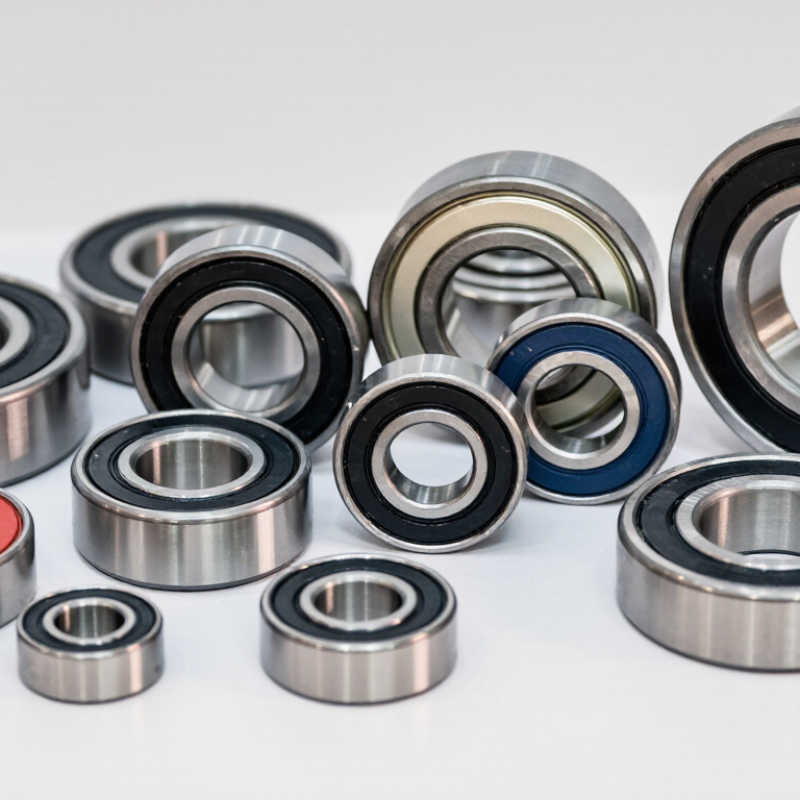
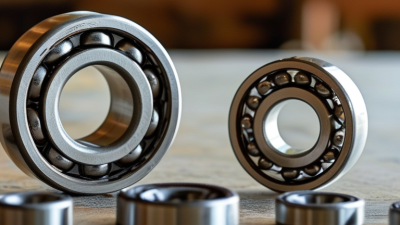
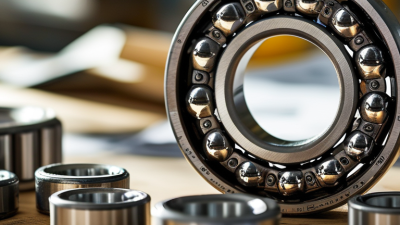
Radial ball bearings support rotating shafts while reducing friction between moving parts. They contain an inner ring, an outer ring, hardened balls, and a cage. The inner ring usually fits the shaft, while the outer ring sits inside a housing. The balls roll along carefully shaped raceways between both rings. They roll, not slide.
When a motor turns, the shaft rotates the inner ring. The balls transfer the load toward the stationary outer ring. This design mainly handles radial loads, such as a pulley pulling downward on a shaft. Many radial bearings also accept limited axial force, but excessive side loading can shorten their service life. The cage keeps the balls evenly spaced and helps prevent contact between them.
Lubrication reduces heat and protects the raceways from wear. Sealed versions help block dust and retain factory grease, while shielded versions may offer lower friction. Selection depends on load, speed, shaft size, temperature, and moisture exposure. A bearing that fits perfectly may still fail if the housing is misaligned. Small installation marks matter. Clean hands, correct tools, and controlled pressing force are practical safeguards. I have seen buyers focus only on dimensions, then overlook internal clearance and operating temperature. That is an easy mistake. Noise, rising temperature, vibration, or darkened grease can indicate trouble before seizure occurs. Some applications need frequent inspection, even when the bearing appears simple.
10 Best Radial Ball Bearings for Global Buyers? - What Are Radial Ball Bearings and How Do They Work?
| Rank | Standard Size | Bore Diameter (d) | Outside Diameter (D) | Width (B) | Common Configuration | How It Works | Typical Applications | Key Selection Advantage |
|---|---|---|---|---|---|---|---|---|
| 1 | 6000 | 10 mm | 26 mm | 8 mm | Single-row deep-groove; open, shielded, or sealed versions | Hardened raceways guide the balls, while the rolling contact reduces sliding friction and supports mainly radial loads. | Small electric motors, fans, instruments, pumps, and compact machinery | Very compact, lightweight, and widely available in international metric equipment. |
| 2 | 6001 | 12 mm | 28 mm | 8 mm | Single-row deep-groove; open, shielded, or sealed versions | The balls transfer radial force between the inner and outer rings while allowing continuous rotation with low friction. | Small gearboxes, rollers, household equipment, and light-duty drives | Good balance between low cross-section, availability, and general-purpose performance. |
| 3 | 6002 | 15 mm | 32 mm | 9 mm | Single-row deep-groove; commonly supplied with metal shields or contact seals | Deep raceway grooves accommodate radial loads and limited axial loads in both directions. | Small conveyors, motors, agricultural devices, and general industrial equipment | Versatile metric size with a useful increase in load capacity over smaller 6000-series sizes. |
| 4 | 6003 | 17 mm | 35 mm | 10 mm | Single-row deep-groove; open, non-contact shielded, or rubber-sealed versions | Rolling balls minimize friction between the rotating shaft and stationary housing while carrying combined radial and light axial forces. | Fans, pumps, electric motors, machine tools, and agricultural machinery | Strong general-purpose option when a moderate bore and compact housing are required. |
| 5 | 6004 | 20 mm | 42 mm | 12 mm | Single-row deep-groove; open, shielded, or sealed configurations | The inner ring rotates with the shaft, the outer ring fits the housing, and the balls roll between both raceways. | Medium-size motors, pumps, conveyors, compressors, and industrial drives | Practical choice for medium radial loads while retaining a relatively narrow section. |
| 6 | 6005 | 25 mm | 47 mm | 12 mm | Single-row deep-groove; sealed versions are suitable where contamination is present | Precision-ground raceways and rolling elements provide smooth rotation and accommodate radial loads plus limited axial loads. | Industrial motors, pumps, fans, gear drives, and material-handling systems | Widely useful intermediate size with a good combination of shaft capacity and compact design. |
| 7 | 6006 | 30 mm | 55 mm | 13 mm | Single-row deep-groove; open, shielded, or contact-sealed configurations | The deep-groove geometry supports radial forces and moderate axial forces from either direction during rotation. | Medium industrial motors, pumps, gearboxes, conveyors, and agricultural equipment | Suitable for applications requiring a larger shaft diameter without a wide bearing envelope. |
| 8 | 6007 | 35 mm | 62 mm | 14 mm | Single-row deep-groove; shielded or sealed versions for reduced maintenance | Rolling contact distributes load across the raceways, reducing friction compared with plain sliding bearings. | Electric motors, pumps, reducers, conveyors, and general machinery | Reliable option for higher shaft sizes while maintaining a standard narrow-series profile. |
| 9 | 6008 | 40 mm | 68 mm | 15 mm | Single-row deep-groove; open, shielded, or sealed configurations | The balls roll in continuous circular paths, transmitting radial loads and limited axial loads with low operating friction. | Large motors, pumps, fans, gearboxes, compressors, and industrial production lines | Good fit for larger shafts where space is limited in the axial direction. |
| 10 | 6009 | 45 mm | 75 mm | 16 mm | Single-row deep-groove; open, shielded, or sealed configurations | Matched inner and outer raceways maintain ball guidance, allowing smooth shaft rotation under primarily radial loading. | Heavy-duty motors, pumps, conveyors, industrial fans, and power-transmission equipment | Offers a larger bore and higher load potential within the narrow 6000-series design family. |
Note: The dimensions shown are nominal metric boundary dimensions commonly associated with the 6000-series deep-groove radial ball-bearing designations. Actual load ratings, speed limits, internal clearance, tolerances, materials, and seal performance vary by specification and manufacturer. Radial ball bearings primarily support radial loads and can accommodate limited axial loads in both directions.
Related Posts
-
China Top Radial Deep Groove Ball Bearings for Global Buyers?
-
Top High Speed Ball Bearings for Global Buyers in China?
-
China Top 10 Suppliers for Ball Bearing 6204 in 2026?
-
2026 How to Select the Best Small Ball Bearings for Your Projects?
-
Top Tips for Sourcing Ball Bearing 6202 Efficiently?
-

Discover Top Precision Ball Bearings at China Import Export Fair 2026?