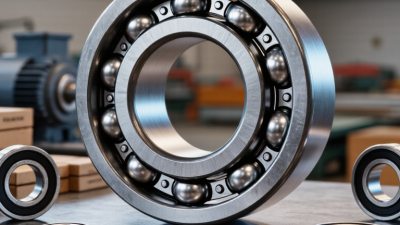
Top Thin Section Ball Bearings Suppliers Worldwide?

Thin Section Ball Bearings support demanding applications where space, weight, and rotational accuracy matter. Their compact cross-sections appear in robotics, aerospace systems, medical equipment, radar platforms, and semiconductor machinery. These bearings can deliver high precision, but performance depends on load calculations, material selection, sealing, and installation quality.

The global bearing industry remains substantial. Fortune Business Insights reported that the worldwide bearings market reached approximately USD 132 billion in 2023, with continued growth expected through the decade. Grand View Research also identifies automation, aerospace, and advanced manufacturing as important demand drivers. However, broad market figures rarely isolate Thin Section Ball Bearings. That limitation matters.

This guide examines leading worldwide suppliers, including manufacturers with established engineering, testing, and distribution capabilities. Companies such as SKF, Schaeffler, NSK, and specialized thin-section producers serve different technical requirements. Their product ranges, certifications, lead times, customization options, and after-sales support should be compared carefully. Bigger is not always better.

Reliable selection requires evidence. ISO 281 provides a framework for bearing life calculations, while ISO 199 addresses dimensional and tolerance principles for rolling bearings. Supplier catalogs should be checked against operating speed, axial loads, radial loads, moment loads, temperature, and contamination exposure. A laboratory-grade bearing may fail early in a dusty factory.

Data can mislead. Supplier rankings change with region, product category, and exchange rates. Public reports also use different definitions. Therefore, this overview combines industry research, manufacturer documentation, and practical purchasing criteria. It aims to help engineers and buyers identify credible suppliers, not promote one universal winner. Careful verification remains essential.
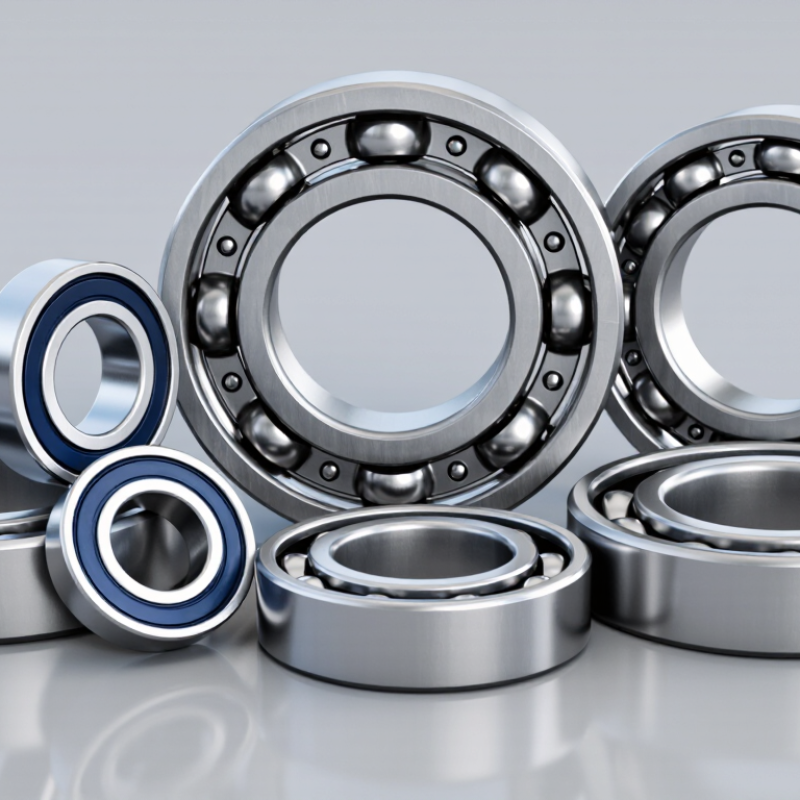
Top Thin Section Ball Bearings Suppliers Worldwide?

What Are Thin Section Ball Bearings and Where Are They Used?

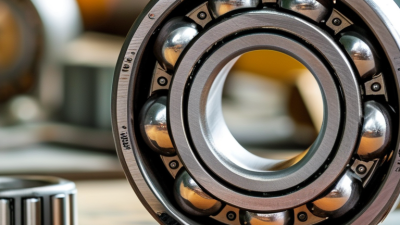
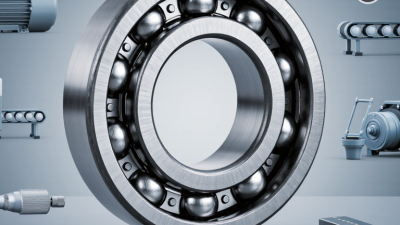
Thin section ball bearings use balls, raceways, and cages within a compact radial cross-section. Their bore is relatively large compared with their outside diameter. This geometry saves space and weight. It also supports rotating parts around cables, shafts, or hollow structural members. Under ISO 281, basic rating life is the point at which 90% of identical bearings are expected to survive. That figure is useful, but real service depends on load, contamination, lubrication, alignment, and speed.

Their applications are highly varied. Robotic joints use them when compact motion and low rotational resistance matter. Aerospace actuators, satellite mechanisms, medical scanners, antenna platforms, and semiconductor equipment also use this design. In a robotic arm, a thin section bearing may leave room for wiring through the center. In an imaging system, low friction can help maintain positioning accuracy. Packaging machines and optical instruments use them where repeated movement meets limited installation space.

Recent industry assessments report steady growth in the global bearing market, with several 2024 forecasts estimating annual growth near 5% to 8%. These reports group products differently, so their figures are not perfectly comparable. That limitation deserves attention. A thinner bearing is not automatically a better bearing. Engineers should check static capacity, moment loading, seal performance, preload, material traceability, and cleanliness requirements. Supplier selection should also include inspection records and fatigue-life calculations, not only catalog dimensions. Small errors in shaft fit can create noise, heat, and premature failure.

Top Thin Section Ball Bearings Suppliers Worldwide? - What Are Thin Section Ball Bearings and Where Are They Used?
Bearing category Main construction Primary load capability Typical applications Common materials and options Key selection considerations Relevant technical references
Four-point contact Single-row raceway with Gothic-arch geometry; balls make four contact points under combined loading. Radial loads plus axial loads in both directions; suitable for moment loading when properly preloaded. Robotic joints, indexing tables, antenna positioning systems, semiconductor equipment and compact rotary assemblies. Through-hardened bearing steel, stainless steel, corrosion-resistant coatings, open or sealed configurations, and optional separators. Axial direction, moment load, stiffness, preload, runout, mounting accuracy and allowable speed. ISO 15 for boundary dimensions where applicable; ISO 281 for dynamic load rating and rating life.
Radial contact Deep-groove raceway optimized primarily for radial loading and continuous rotation. High radial capacity with limited axial capacity in both directions. Electric motors, optical equipment, packaging machinery, medical instruments and light-duty automation. Bearing steel or stainless steel rings and balls; shields, contact seals, non-contact seals and high-temperature grease are common options. Radial load, speed, contamination, lubrication, temperature, seal drag and required operating life. ISO 281 for life calculation; ISO 76 for static load rating assessment.
Angular contact Raceway geometry creates a defined contact angle for combined radial and axial loading. High axial capacity in one direction per bearing; paired arrangements can support axial loads in both directions and improve rigidity. Machine-tool spindles, precision rotary stages, screw-support assemblies and high-accuracy motion systems. Hardened steel or stainless steel, precision-grade balls, controlled preload and matched bearing pairs. Contact angle, preload, paired arrangement, stiffness, thermal expansion, speed and shaft or housing accuracy. ISO 15, ISO 281 and ISO 76, together with the application-specific manufacturer rating method.
Open configuration No integral shield or seal; the rolling elements and raceways remain accessible for external lubrication systems. Lowest sealing resistance and generally favorable heat dissipation, subject to the lubrication arrangement. Clean industrial equipment, vacuum-compatible assemblies, laboratory mechanisms and systems using oil or centralized lubrication. Steel or stainless steel components with grease, oil, dry-film or application-specific lubrication. Contamination control, relubrication access, lubricant compatibility and enclosure design. ISO 281 lubrication and life assumptions should match the actual operating environment.
Shielded configuration Non-contact metal shields reduce entry of larger contaminants while limiting friction increase. Suitable for moderate contamination protection and high-speed operation where contact seals may create excess drag. Electric motors, fans, encoders, office equipment and enclosed light-duty mechanisms. Metal shields, standard bearing steel or stainless steel, and factory-filled grease. Shield clearance, dust exposure, speed, grease life and the need for washdown protection. ISO 281 life calculations should account for actual contamination and lubrication conditions.
Sealed configuration Contact or low-friction non-contact seals retain grease and help protect the raceway from dust and moisture. Good contamination resistance; contact seals normally increase friction and operating temperature compared with open bearings. Food-processing machinery, outdoor equipment, conveyors, medical devices and maintenance-free assemblies. Nitrile rubber, fluorocarbon rubber or other application-specific elastomers; stainless steel is used where corrosion resistance is required. Seal material, chemical exposure, water ingress, temperature, friction torque and grease compatibility. ISO 281 and ISO 76; seal performance must also be validated against the operating environment.
Stainless-steel construction Corrosion-resistant rings and rolling elements, commonly selected for humid, clean or chemically exposed environments. Provides corrosion resistance, but load capacity and hardness may differ from standard through-hardened bearing steel. Food and beverage equipment, laboratory devices, marine environments, clean equipment and outdoor mechanisms. Corrosion-resistant steel, stainless balls, sealed or shielded designs, and food-compatible or chemically resistant lubricants. Corrosion mechanism, washdown chemicals, magnetic requirements, load rating, temperature and lubricant certification. ISO 281 and ISO 76 ratings must be based on the selected stainless-steel grade and heat treatment.
Custom or application-engineered Non-standard dimensions, materials, preload, internal geometry, lubrication or mounting features developed for a defined application. Can be optimized for combined loads, low torque, high stiffness, vacuum, radiation, cleanroom use or extreme temperatures. Aerospace mechanisms, space systems, precision robotics, medical imaging, vacuum equipment and specialized automation. Special steels, ceramic or hybrid rolling elements, coatings, engineered cages, dry lubricants and application-specific seals. Design validation, traceability, inspection capability, prototype support, qualification testing and documented quality systems. ISO 281, ISO 76, ISO 199 and customer-specific qualification or aerospace quality requirements where applicable.
Supplier evaluation checklist
Compare suppliers by dimensional capability, bearing type, material availability, sealing and lubrication options, load and life calculation support, runout and preload control, inspection documentation, customization capability, production traceability, minimum order quantity and delivery coverage. Thin-section bearings are selected primarily to save radial space and weight; the final choice should be based on calculated loads, speed, stiffness, environment and required service life.

How to Evaluate Worldwide Thin Section Ball Bearing Suppliers

Evaluating worldwide thin section ball bearing suppliers requires more than comparing unit prices. A 2024 Grand View Research report valued the global bearing market at over USD 130 billion, with automation and aerospace supporting continued demand. Market size, however, does not prove supplier capability. Ask for material certificates, heat-treatment records, dimensional reports, and batch traceability. These details expose weak quality control quickly.

Technical evaluation should begin with load calculations under real operating conditions. Check radial loads, axial loads, speed, temperature, lubrication, and required service life. ISO 281 provides the standard method for calculating bearing rating life. Request test data based on that method, not only catalog ratings. For thin sections, raceway roundness and cross-sectional consistency deserve special attention. A small variation can increase vibration or torque.

Audit production evidence, inspection equipment, and corrective-action records. I would also order a pilot batch and measure bore size, runout, noise, and starting torque independently. This step costs time. It can prevent expensive field failures. Supplier audits should include process control and worker training, not just certificates. ISO 9001 certification is useful, but it cannot replace physical testing. Published bearing-market forecasts vary widely, which is a reminder to question confident claims. A supplier may offer impressive capacity figures, yet struggle with a small custom batch. That uncomfortable gap deserves investigation.

Which Manufacturing Standards and Materials Affect Bearing Quality?

Thin section ball bearing quality depends heavily on manufacturing discipline, material selection, and inspection depth. ISO 9001 can indicate controlled processes, but it does not prove every bearing performs equally. Buyers should request dimensional reports based on relevant bearing tolerances, load ratings, and life calculations. They should also review heat-treatment records, raceway hardness, surface finish, and steel-lot traceability. A certificate alone is not enough.

Common race and ball materials include 52100 chromium steel, stainless 440C steel, and silicon nitride ceramics. Chromium steel offers strong fatigue resistance for clean, lubricated environments. Stainless steel improves corrosion resistance but may provide different load and hardness characteristics. Ceramic balls reduce weight and friction, although they usually increase cost. Cage materials also matter. Brass handles demanding conditions, while engineered polymers can reduce noise and mass. Material choice is a trade-off.

During supplier evaluations, engineers should measure radial runout, preload, torque, noise, and seal performance. Small deviations can create vibration in robotic joints or medical equipment. I once treated low friction as proof of quality. That was too narrow. A bearing may rotate smoothly during inspection yet fail after contamination, heat cycling, or insufficient lubrication. Reliable suppliers explain their test methods, sampling plans, and corrective actions. Their records should connect raw material data with each production batch. Even experienced teams can overlook cage wear or lubricant compatibility. That deserves careful review.

How Do Leading Suppliers Compare in Design, Customization, and Support?

Comparing top thin section ball bearing suppliers requires more than checking price or catalog depth.

Grand View Research estimated the global ball bearing market at about USD 19 billion in 2023, with continued growth through 2030. That expansion increases supplier choice, but not necessarily engineering quality.

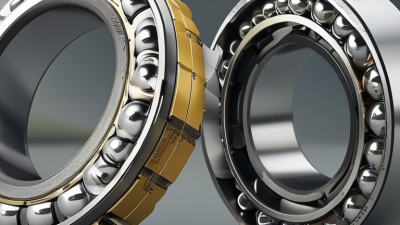
Leading suppliers usually offer radial, angular-contact, and four-point-contact designs. Their design advantage appears in raceway geometry, preload control, sealing, and material traceability.

For compact robotic joints, a small change in section height can affect stiffness and service life. ISO 281 remains a useful reference for basic rating life calculations. Yet laboratory ratings do not fully predict vibration, contamination, or installation errors.

Customization separates capable suppliers from simple resellers.

Strong suppliers can modify bore size, cage material, lubrication, clearance, and corrosion protection. They should also provide drawings, tolerance data, load calculations, and application testing.

MarketsandMarkets has reported rising demand for customized bearing solutions across robotics, aerospace, and medical equipment.

Support quality matters here. A responsive engineer can review shaft fits and mounting torque before production begins. That saves expensive rework.

Sometimes, however, customization is overstated. A supplier may offer many options but lack validation equipment or documented test results.

Ask for measured data, not attractive promises.

After-sales support should include failure analysis, replacement planning, and clear technical communication. The best comparison is practical: design depth, customization evidence, and support response under real operating conditions.

What Should Buyers Check Before Choosing a Global Supplier?

Top Thin Section Ball Bearings Suppliers Worldwide?

Choosing a global thin section bearing supplier requires more than comparing prices. Buyers should examine manufacturing experience, application knowledge, and quality controls. Ask how the supplier handles radial loads, axial loads, moment loads, and high-speed operation. A bearing that fits the drawing may still fail under combined loading.

Request material specifications, heat-treatment records, dimensional reports, and cleanliness data. Check whether each batch has traceability from raw material to final inspection. Relevant quality certifications can support reliability, but certificates alone are not enough. Review actual inspection procedures, including raceway runout, radial play, noise, and torque. Small details matter. A polished website is not proof.

Tips: Send the supplier your real operating conditions, not only the bearing size. Include speed, temperature, load cycles, mounting accuracy, lubrication, and expected service life. Ask for sample units and inspect them before approving volume production. Confirm lead times, packaging, replacement policy, and technical response times in writing. Communication matters during design changes. Some buyers overlook it.

Compare test evidence instead of accepting broad performance claims. Ask whether testing uses your intended load and speed range. Suppliers should explain limitations clearly, including seal behavior, lubricant compatibility, and storage conditions. If an answer sounds vague, request measurable data. A lower quotation may hide tighter inspection limits, longer delivery risk, or unsuitable materials. The final decision should balance engineering evidence, supply continuity, and the supplier’s willingness to correct mistakes.

Top Thin Section Ball Bearings Suppliers Worldwide: Buyer Evaluation Priorities

Before selecting a global thin section ball bearing supplier, buyers should verify documented quality systems, dimensional accuracy, material traceability, load and speed data, regulatory compliance, customization capability, and delivery reliability. The scores below are a neutral procurement framework on a 1–5 priority scale, not ratings of any specific company or brand.