Choosing a reliable Ball Bearing 6202 supplier in China requires more than comparing catalog prices. The right supplier should demonstrate material control, dimensional accuracy, lubrication knowledge, and consistent production records. A 6202 bearing may look small, yet it can support motors, conveyors, pumps, agricultural equipment, and compact industrial assemblies. A few microns can matter.
Tedric A. Harris, a respected rolling-bearing authority and author of Rolling Bearing Analysis, stated, “Bearing life is not determined by load alone.” That principle remains practical today. Seal quality, shaft alignment, contamination control, mounting pressure, and operating temperature can change performance significantly. Supplier evidence matters. Look for ISO certification, inspection reports, traceable steel sources, and clear testing procedures. Photographs are useful, but they are not proof.
This guide examines China’s top 10 Ball Bearing 6202 suppliers through a buyer’s perspective. It considers manufacturing experience, technical support, customization ability, export reliability, and after-sales communication. Some suppliers may offer excellent pricing but limited engineering assistance. Others may provide stronger quality systems while requiring higher minimum orders. That trade-off deserves attention.
Real-world selection is rarely perfect. Product pages can omit important details. Certifications may not explain every production step. Buyers should request samples, verify markings, measure noise and vibration, and review failure feedback before placing large orders. A polished factory tour is not enough. Performance must be checked under actual working conditions. This introduction sets a practical foundation for comparing suppliers with greater confidence, while recognizing that one ranking cannot fit every application.
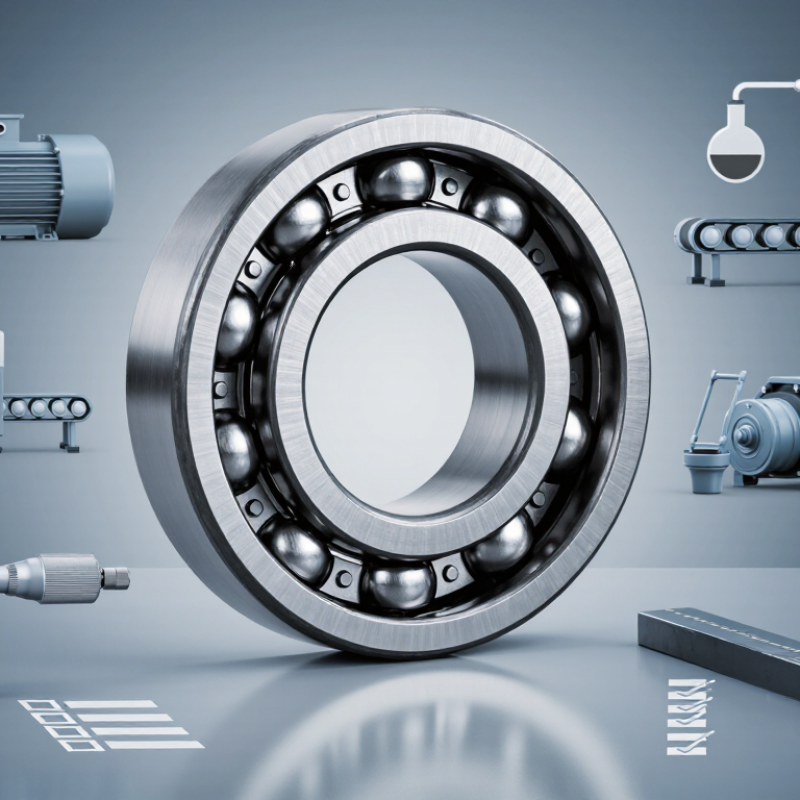
The 6202 bearing uses a 15 × 35 × 11 mm boundary size under ISO 15. Its 15 mm bore fits many compact shafts, while the 35 mm outside diameter supports moderate radial loads. The 11 mm width allows economical housing designs. This is a single-row, deep-groove ball bearing. It handles radial loads and limited axial loads in both directions. However, the 6202 code does not define sealing, clearance, cage material, or lubricant.
That distinction matters when comparing China’s top 10 ball bearing suppliers. Open, shielded, and sealed versions can share the same basic dimensions. Their friction, contamination resistance, and service life may differ sharply. ISO 281 provides the basic rating-life method, using dynamic load ratings and operating loads. Actual ratings must come from verified test data, not the part number alone. A 2024 Grand View Research market report estimated strong global growth in ball bearings, driven by motors, machinery, and automotive equipment. Growth does not guarantee consistent quality.
Ask suppliers for ISO 9001 certification, dimensional inspection records, hardness results, and noise testing data. Check whether tolerance grades follow ISO 199. Grease type also deserves attention. Low-temperature equipment may need a different lubricant than a dusty conveyor. I have seen buyers compare only price and dimensions. That is an incomplete shortcut. Confirm shaft fit, housing fit, load direction, speed, and operating temperature before approval. Clearance is easy to overlook. C3 clearance is not automatically better.
China’s top ten 6202 suppliers should be compared through measurable capacity, not catalog claims. A standard 6202 bearing measures 15 × 35 × 11 mm. Ask each supplier for monthly output, furnace capacity, machining cycle time, and delivery records. A factory producing 20 million units monthly may still struggle with stable tolerances.
ISO 9001 matters, but certification is not proof of bearing life. The ISO Survey 2022 recorded more than 1.2 million ISO 9001 certificates worldwide. Buyers should verify the certificate scope and audit date. During factory reviews, check traceability from steel receipt to final packing. Useful metrics include ISO 492 dimensional tolerance, radial clearance, vibration values, hardness variation, and grease fill accuracy. Life testing should reference ISO 281 calculations and documented load conditions.
Look for process capability, too. A reported Cpk above 1.33 is a practical benchmark for critical dimensions, although many suppliers disclose only average results. That weakness deserves attention. Request three months of inspection data, not one attractive sample. Check defect rates in parts per million, complaint closure time, and batch-level test records. Supplier audits should include noise testing, seal inspection, and carton drop checks. These details reveal whether ISO 9001 controls daily production or simply decorates a certificate. Industry market studies, including reports from Grand View Research, also show strong demand for industrial bearings, increasing pressure on factories to expand without losing consistency.
This chart uses the standardized nominal dimensions of a 6202 deep-groove ball bearing as an objective product-quality reference: 15 mm bore, 35 mm outside diameter, and 11 mm width. Supplier capacity and ISO 9001 status should be verified through current factory records, certificates, and audits rather than inferred from product dimensions alone.
Reference basis: ISO 15 nominal boundary dimensions for the 6202 bearing designation. Dimensions shown in millimeters. ISO 9001 is a quality-management-system certification and does not define bearing size or performance.
A reliable 6202 supplier should publish traceable inspection data, not only attractive catalog prices. The 6202 bearing has nominal dimensions of 15 × 35 × 11 mm. ISO 492:2014 defines dimensional and rotational accuracy classes. Standard-grade tolerance may suit general motors, conveyors, and small pumps. Precision applications need tighter documented grades. Ask suppliers for actual measurement reports, not unexplained “high precision” claims.
Seal selection changes operating behavior. 2RS seals retain grease and resist dust, while ZZ shields reduce contact drag but offer less contamination protection. Internal clearance also matters. C0 is common for normal temperatures and fits. C3 provides more running clearance after heat or interference fits. ISO 281:2007 defines basic rating life, L10, at 90% reliability. However, published dynamic load ratings can differ between suppliers, even with identical dimensions. Compare test methods, cage materials, grease type, and rated speed before choosing.
Tips: Request ISO 492 inspection records, ISO 281 load calculations, and batch-level noise data. Confirm whether ratings apply to sealed or open versions. Check shaft and housing fits carefully. A small clearance mistake can create early heat, vibration, and failure. My practical concern is simple: supplier rankings can look precise, yet inconsistent sampling weakens them. Independent pre-shipment testing is still worth the cost.
For China’s top 10 6202 suppliers, performance comparison should begin with verified operating data, not catalog claims.
A standard 6202 bearing measures 15 × 35 × 11 mm. Its basic dynamic load rating commonly falls near 7.5–9.5 kN, depending on internal design and clearance. ISO 281:2007 calculates basic rating life using L10 = (C/P)³ million revolutions for ball bearings.
The C/P ratio matters sharply. With C = 8.5 kN and an equivalent load P of 0.85 kN, the ratio reaches 10. The calculated L10 life is then 1,000 million revolutions.
If contamination raises P to 1.7 kN, the ratio falls to 5, reducing calculated life to 125 million revolutions. Small load changes create large life differences. This is often overlooked.
Speed limits require equal caution. Industry catalogs commonly place open 6202 bearings near 28,000–32,000 rpm, while sealed versions may operate closer to 18,000–24,000 rpm. Grease type, cage material, radial clearance, and heat removal can change these figures. ISO 15312 provides a framework for thermal reference speed, but it is not a guaranteed operating limit.
A supplier should show test conditions, lubricant grade, temperature, and vibration results. Otherwise, the number looks precise but remains incomplete.
One practical concern remains: identical dimensions do not guarantee identical endurance.
When comparing 6202 bearing suppliers in China, check motor duty before price. The standard 6202 size is 15 × 35 × 11 mm. However, internal clearance, cage material, seals, and grease can differ. For electric motors, low vibration and stable rotation matter greatly. Ask for noise testing, dimensional reports, and batch traceability. A bearing may look perfect but still perform poorly under heat.
MOQ affects both cost and flexibility. Small orders may carry higher unit prices, while large MOQs can create unwanted inventory. Request samples before approving production. Typical lead times range from 7 to 15 days for stocked items. Customized seals, packaging, or grease may require several weeks. Confirm whether the quoted lead time includes inspection and export preparation. Delays are sometimes caused by unclear drawings, not manufacturing alone.
Tips: Specify operating speed, load, temperature, and shaft fit. Choose grease for the actual motor environment, not a generic label. For humid areas, sealed bearings can reduce maintenance, but seals may increase friction. Ask for the grease type and filling percentage. A supplier’s certificate is useful, but it should not replace incoming inspection. My practical view is simple: compare test evidence, not promises. I have seen purchasing teams focus too heavily on MOQ and overlook lubrication compatibility. That mistake can shorten service life.