7 Best Ball Bearing 6202 Buying Tips for Global Buyers
Buying the right Ball Bearing 6202 requires more than comparing prices or reading a supplier’s headline specifications. Global buyers must examine dimensions, load capacity, sealing design, material quality, tolerance class, lubrication, and traceability. A 6202 bearing may appear identical across catalogs, yet its performance can differ sharply under heat, dust, moisture, or continuous industrial speed.
Bearing specialist Dr. Robert B. Errichello offered a practical principle: “Bearing life is governed by operating conditions, not size alone.” That reminder matters when selecting a Ball Bearing 6202 for motors, pumps, conveyors, agricultural equipment, or general machinery. A clean factory sample may run quietly during inspection, but poor storage, incorrect mounting, or contaminated grease can shorten its service life quickly. Small details matter.
This guide presents seven buying tips for international purchasers. It considers bore and outside diameter accuracy, radial clearance, seal options, steel quality, lubrication compatibility, supplier documentation, and after-sales support. These points help buyers compare manufacturers more fairly and reduce costly misunderstandings across borders. Still, no checklist is perfect. Real applications vary, and a bearing chosen only from a catalog may disappoint. Confirm the shaft fit, operating temperature, speed, radial load, and surrounding environment before ordering. Ask for inspection records when consistency matters. Check packaging, too. A dented box can hide a damaged bearing. Careful questions often reveal more than polished sales language.
Understanding 6202 Ball Bearing Specifications and Industry Standards
7 Best Ball Bearing 6202 Buying Tips for Global Buyers
Understanding 6202 Ball Bearing Specifications and Industry Standards
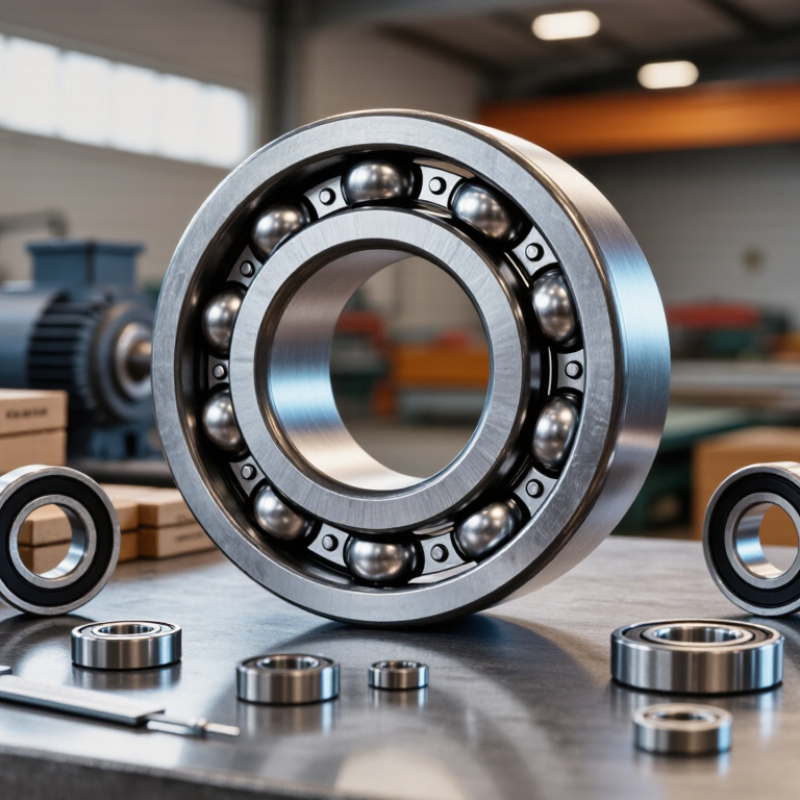
A 6202 bearing normally has a 15 mm bore, a 35 mm outside diameter, and an 11 mm width. ISO 15:2017 defines these boundary dimensions for interchangeability. Check the drawing, not only the product code. Small suffix differences can change clearance, seals, or lubrication. Fit matters.
ISO 492:2014 classifies dimensional and rotational accuracy. Standard tolerance is often adequate for conveyors, pumps, and general electric motors. High-speed spindles may require a tighter accuracy class. However, tighter tolerances do not automatically create longer life. This is where many purchasing decisions become too optimistic. Ask for tolerance records and inspection methods.
ISO 281:2007 calculates basic rating life from dynamic load rating and equivalent load. It uses millions of revolutions, not guaranteed calendar hours. Compare the supplier’s C rating, radial load, axial load, and operating speed under the same conditions. A 6202 with a C3 internal clearance may suit heat or interference fits, but it can run noisily when cold. Seal type also matters: contact seals protect better, while shields usually reduce friction. Review certificates, material data, grease limits, and batch traceability. Independent verification is worth the cost for critical equipment. Measure twice. Then challenge the assumption that the cheapest bearing is the lowest-cost option.
7 Best Ball Bearing 6202 Buying Tips for Global Buyers - Understanding 6202 Ball Bearing Specifications and Industry Standards
| No. | Buying Tip | 6202 Reference Data | Specification or Standard to Check | Why It Matters | Recommended Buyer Action |
|---|---|---|---|---|---|
| 1 | Confirm the bearing size |
Bore diameter: 15 mm Outside diameter: 35 mm Width: 11 mm |
ISO 15 Metric dimensions | These are the standard boundary dimensions commonly assigned to a 6202 single-row deep-groove ball bearing. Incorrect dimensions can prevent proper installation or cause excessive clearance. | Match the 15 × 35 × 11 mm dimensions with the shaft, housing, drawing, and existing bearing before placing an order. |
| 2 | Choose the correct seal or shield |
Open: no suffix Shielded: 6202-ZZ or 6202-2Z Contact sealed: 6202-2RS |
Sealing design is identified by suffix conventions used in bearing catalogues. Suffix meanings should be confirmed in the supplier's technical documentation. | Shields reduce contamination entry with low friction, while contact seals provide better protection against dust and moisture but may increase friction and operating temperature. | Select open bearings for protected, clean lubrication systems; select shields or seals when contamination protection is required. |
| 3 | Specify internal clearance |
Standard radial internal clearance: CN or C0 Larger clearance option: C3 |
ISO 5753-1 Radial internal clearance classes include CN/C0, C2, C3, C4, and C5. | Clearance changes during operation because of interference fits and temperature differences between the shaft, bearing rings, and housing. | Use CN/C0 for general applications unless calculations indicate otherwise. Consider C3 only when operating conditions, fits, or temperature require additional clearance. |
| 4 | Check precision and dimensional tolerance |
Normal precision: ISO Class 0 Common equivalent designation: P0 |
ISO 492 ISO 199 Precision classes commonly include P0, P6, P5, P4, and P2. | Higher precision classes provide tighter dimensional and running tolerances, which may be required for high-speed, low-vibration, or precision equipment. | Use P0 for standard industrial service when permitted by the equipment design. Request P6 or higher only when the application specification requires it. |
| 5 | Evaluate load and speed requirements |
Bearing type: single-row deep-groove ball bearing Load capability: radial and limited axial loads in both directions Speed ratings: application- and configuration-dependent |
ISO 281 Load ratings and rating life should be evaluated using the manufacturer's declared dynamic and static load ratings. | A 6202 bearing can support combined radial and axial loads, but actual life depends on load magnitude, speed, lubrication, contamination, alignment, and mounting. | Compare the declared basic dynamic load rating, basic static load rating, limiting speed, and calculated L10 rating life with the machine requirements. |
| 6 | Verify material and heat-treatment requirements |
Common bearing steel: through-hardened chromium steel Typical material designation: 100Cr6 / SAE 52100 equivalent families |
ISO 683-17 Verify material, hardness, cleanliness, and heat-treatment records when the application is critical. | Material quality and heat treatment affect fatigue resistance, dimensional stability, wear behavior, and service life. | Request material certificates, hardness information, manufacturing batch traceability, and inspection records for demanding or regulated applications. |
| 7 | Confirm lubrication, operating environment, and documentation |
Standard pre-greased sealed versions are commonly supplied with factory grease. Open versions normally require an application-specific lubrication system. |
ISO 6743-9 Lubricant selection should consider temperature, speed, load, moisture, and compatibility with seals and materials. | Incorrect grease, insufficient lubrication, water ingress, or poor storage can cause premature noise, corrosion, overheating, and fatigue damage. | Ask for grease type, fill quantity, temperature range, storage conditions, packaging date or batch code, inspection report, and compliance documents before shipment. |
Related Posts
-
China Top 10 Ball Bearing 6202 Manufacturers Guide
-
Top Shaft Roller Bearing Types and Their Applications?
-

China Best Thin Section Bearings Overview and Applications Guide?
-
2026 How to Choose the Right Stainless Bearing for Your Needs?
-
2026 How to Select Precision Ball Bearings for Optimal Performance?
-

China Top 10 Shaft Roller Bearing Manufacturers and Their Unique Offerings?