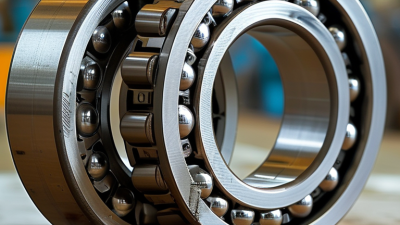
Top 10 Types of Metal Ball Bearings for Global Buyers

Choosing the right Metal Ball Bearings can influence machine life, operating noise, maintenance costs, and delivery reliability. Global buyers often compare more than price. They examine load capacity, rotational speed, material grade, sealing design, lubrication, tolerance, and supplier traceability. A bearing that performs well in a clean factory may fail quickly near saltwater, dust, or frequent washdowns. Small details matter.

This guide introduces ten practical types for international sourcing decisions. It considers deep-groove, angular-contact, thrust, self-aligning, miniature, flanged, stainless-steel, chrome-steel, ceramic-hybrid, and full-complement designs. Each type serves a different mechanical purpose. Some handle radial loads efficiently. Others support axial force or compensate for slight shaft misalignment. Stainless steel improves corrosion resistance, but it may not deliver the highest load rating. Ceramic hybrids can reduce friction, although their purchase price is usually higher.

Real purchasing work requires careful verification. Ask for dimensional drawings, material certificates, test records, and relevant quality documentation. Check whether the stated load ratings follow recognized bearing standards. Confirm packaging details, because moisture can damage otherwise excellent components during long shipping routes. This list is useful, but it is not perfect. Application data can be incomplete, and supplier claims still need independent review. A practical buyer should match each bearing to actual loads, temperature, speed, contamination, and maintenance access. That approach supports safer selection and more dependable equipment performance across global markets.
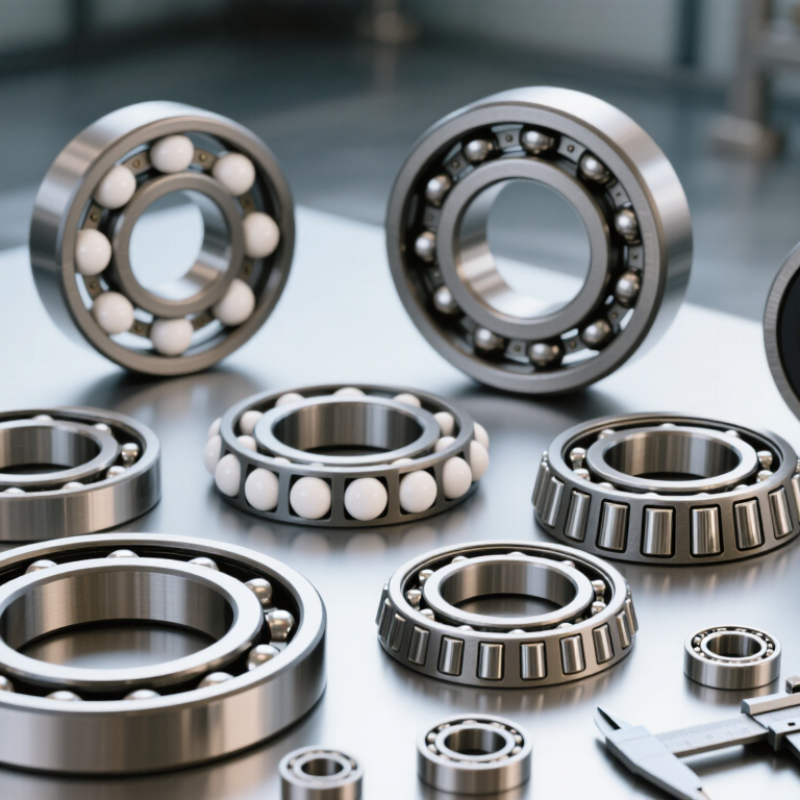
Top 10 Types of Metal Ball Bearings for Global Buyers

Metal Ball Bearings: Structure, Materials, and Operating Principles

Top 10 Types of Metal Ball Bearings for Global Buyers

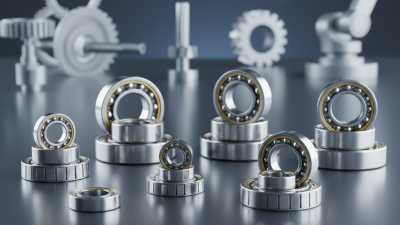
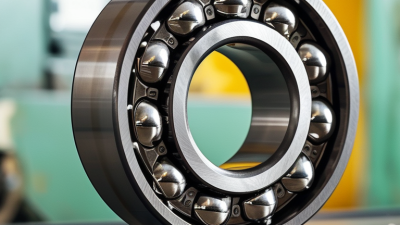
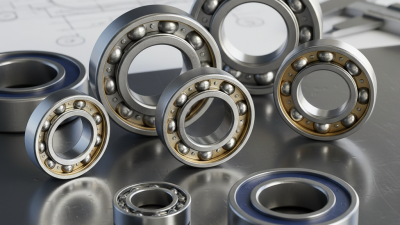
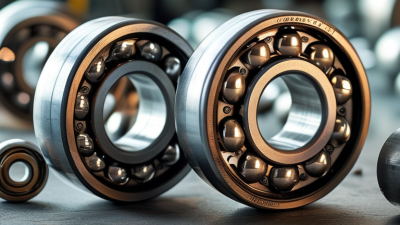
Metal ball bearings support rotating shafts by replacing sliding contact with rolling contact. Their structure usually includes rings, balls, cages, seals, and lubricant.

Deep-groove bearings handle radial loads and moderate axial loads. Angular-contact designs manage combined loads at higher speeds.

Thrust bearings mainly resist axial force. Tapered, cylindrical, spherical, and needle designs serve heavier or misaligned applications.

Material choice changes performance. Chrome steel offers high hardness and cost efficiency. Stainless steel improves corrosion resistance in humid environments. Carbon steel suits controlled indoor conditions but needs better protection. Ceramic balls can reduce heat, yet they are not fully metal bearings.

ISO 281 calculates basic rating life through load, dynamic capacity, and operating conditions. A 2024 market report from Fortune Business Insights estimated the global ball bearing market at over 20 billion US dollars, showing the scale of these decisions. The number looks impressive. It does not guarantee correct selection.

Tips:

Check shaft diameter, load direction, speed, temperature, and contamination before purchasing. A thin grease film should remain visible, not excessive. During field inspections, abnormal humming often appears before serious vibration. Misalignment is commonly underestimated.

The U.S. Department of Energy’s motor-system guidance links proper lubrication and alignment with improved equipment efficiency. However, real workshops are rarely perfect. Dust enters. Operators over-grease. Even accurate calculations may need revision after testing. Review bearing clearance, seal design, and mounting force after the first operating cycle.

Deep-Groove Ball Bearings for General Industrial Applications

Deep-Groove Ball Bearings for General Industrial Applications

Deep-groove ball bearings remain a practical choice for motors, pumps, conveyors, fans, and gearboxes. Their raceway geometry supports radial loads and moderate axial loads in both directions. This versatility helps simplify maintenance planning across mixed industrial sites.

Fortune Business Insights reported that the global bearing market reached about USD 128 billion in 2024. Its forecast also shows continued growth through 2032, driven by machinery, automotive, and renewable-energy equipment. Demand is not only about volume. Buyers increasingly examine service life, sealing, noise, temperature resistance, and replacement compatibility.

Choose the bearing from real operating conditions. Check bore size, rotational speed, load direction, temperature, and contamination exposure. ISO 281 provides the basic rating-life method, while ISO 492 defines important dimensional and running-accuracy requirements. In dusty workshops, sealed versions can reduce lubricant loss and particle entry. In cleaner, hotter systems, shields or open designs may support easier inspection and heat release.

Small details matter.

During field checks, listen for roughness and compare vibration trends over time. A quiet bearing is not automatically a healthy bearing. Misalignment, excessive fits, poor lubrication, and shaft damage can shorten life quickly. The calculation may look precise, yet actual service conditions remain imperfect. Global buyers should request traceable test data, clear tolerances, and documented quality controls before approving a standard deep-groove design.

Top 10 Types of Metal Ball Bearings for Global Buyers

Deep-Groove Ball Bearings for General Industrial Applications

The chart compares representative maximum speed figures for common 10 mm bore deep-groove ball-bearing configurations. Open and hybrid-ceramic designs generally support higher speeds, while contact seals and full-complement designs typically reduce speed capability because of seal friction or increased rolling-element contact. Actual limits vary according to bearing size, clearance, lubrication, load, temperature, and manufacturer specifications.

Angular-Contact Ball Bearings for Combined Loads and High Speeds

Angular-contact ball bearings support radial loads and axial loads at the same time. Their internal raceway geometry creates a defined contact angle. This angle helps the bearing manage thrust during high-speed rotation. Smaller angles usually favor speed. Larger angles generally carry more axial force. The best choice depends on the machine’s actual load direction.

In field inspections, I check preload, shaft fit, lubrication, and housing alignment together. Ignoring one factor can shorten service life. A paired arrangement can handle axial loads in one or both directions. Duplex sets also improve running accuracy when installed correctly. However, higher preload is not automatically better. Excessive preload increases friction, heat, and energy loss. I have seen otherwise sound bearings fail after incorrect mounting pressure.

Global buyers should request load ratings, contact angle, tolerance class, cage material, and operating limits. Ask for inspection records, dimensional reports, and traceable material documentation. Seal selection also matters when dust, moisture, or washdown conditions exist. Open bearings may suit clean, lubricated housings. Sealed versions can simplify maintenance but may limit speed or temperature performance. Check grease compatibility before shipment. Supplier data deserves verification, not blind trust. Small details matter.

Top 10 Types of Metal Ball Bearings for Global Buyers – Angular-Contact Ball Bearings for Combined Loads and High Speeds
No. Bearing Type Typical Contact Angle Load Capability Speed Characteristics Common Material and Cage Options Typical Applications Main Selection Consideration
1 Single-Row Angular-Contact Ball Bearing 15°–25° Supports radial loads and moderate-to-high axial loads in one direction. High-speed capability, especially with light preload and accurate mounting. Through-hardened bearing steel; pressed steel or machined brass cages are common. Machine-tool spindles, pumps, gearboxes, compressors, and general precision equipment. Usually installed in matched pairs when axial loads act in both directions.
2 Single-Row High-Contact-Angle Bearing 30°–40° Higher axial-load capacity than lower-angle designs, with reduced radial-load and speed potential. Moderate-to-high speed, depending on preload, lubrication, and internal clearance. Hardened bearing steel with steel, brass, or polymer cage designs. Vertical shafts, screw supports, industrial pumps, and applications with stronger thrust loads. Choose when axial load is more important than maximum rotational speed.
3 Duplex Pair in Tandem Arrangement (DT) Usually 15°–25° per bearing Both bearings carry axial load in the same direction, increasing one-direction axial capacity. High speed when correctly preloaded; heat generation rises with preload and load. Matched steel bearings with steel, brass, or polymer cages. Ball screws, pumps, compressors, and shafts subject to heavy thrust in one direction. Requires a separate arrangement if axial loads can reverse direction.
4 Duplex Pair Back-to-Back Arrangement (DB) Usually 15°–25° per bearing Handles axial loads in both directions and provides high moment stiffness. High-speed performance with suitable preload and precise housing alignment. Matched hardened steel bearings; cages may be steel, brass, or engineered polymer. Machine-tool spindles, robotic axes, precision gear drives, and high-stiffness shafts. Best for overturning moments and rigid support; sensitive to misalignment.
5 Duplex Pair Face-to-Face Arrangement (DF) Usually 15°–25° per bearing Handles axial loads in both directions with lower moment stiffness than a back-to-back pair. Good speed capability and better tolerance of minor shaft or housing alignment variation. Matched bearing-steel rings and balls with steel, brass, or polymer cages. General-purpose precision shafts, pumps, gearboxes, and moderately loaded spindle systems. Useful where alignment flexibility is more important than maximum rigidity.
6 Triple Tandem Angular-Contact Set (TT) Typically 15°–25° per bearing Very high axial capacity in one direction with increased load-sharing capability. Speed is lower than a single bearing because friction, heat, and preload effects accumulate. Matched precision steel bearings with controlled preload and suitable cages. Heavy-duty ball screws, high-thrust pumps, compressors, and specialized industrial machinery. Needs accurate axial clamping and thermal management; not intended for reversing thrust alone.
7 Four-Point-Contact Ball Bearing Commonly 30°–45° Can carry radial loads and axial loads in both directions using a split-inner-ring or gothic-arch contact geometry. Moderate speed; generally less suitable than single-row designs for very high-speed operation. Hardened bearing steel; robust steel or brass cages are frequently selected. Turntables, indexing mechanisms, gearboxes, and applications with alternating axial loads. Efficient where space is limited, but it should not be heavily loaded in both axial directions simultaneously at high speed.
8 Double-Row Angular-Contact Ball Bearing Usually 25°–32° Supports radial loads and axial loads in both directions through two rows of balls. Moderate-to-high speed, normally below the speed capability of an equivalent single-row pair. Hardened bearing steel with steel or polymer cages; open and sealed versions are available. Automotive wheel systems, pumps, gearboxes, and compact machinery requiring two-direction thrust support. Provides a compact arrangement, but internal preload and heat capacity must be checked carefully.
9 Sealed Angular-Contact Ball Bearing Typically 15°–40°, depending on design Combined radial and axial-load capability with protection against dust and lubricant loss. Moderate-to-high speed; sealing friction can reduce speed compared with open bearings. Hardened bearing steel, contact or non-contact seals, and factory-filled grease. Electric motors, material-handling equipment, pumps, agricultural machinery, and contaminated environments. Reduces maintenance, but seal temperature limits and grease life must be considered.
10 Hybrid Angular-Contact Ball Bearing Commonly 15°–25° Handles combined loads while reducing ball-to-raceway friction and electrical-conduction risk. Very high speed potential with lower centrifugal and gyroscopic forces than all-steel balls. Steel rings with silicon-nitride ceramic balls; steel, brass, or engineered polymer cages. High-speed spindles, electric motors, generators, robotics, and electrically sensitive equipment. Higher purchase cost; verify temperature, lubrication, preload, and electrical requirements.
Technical note: Contact-angle ranges, speed capability, load ratings, preload, and service life vary with bore size, ball diameter, internal geometry, clearance, lubrication, mounting accuracy, and operating temperature. For final selection, compare the manufacturer-neutral bearing dimensions and calculated dynamic and static load ratings with the actual duty cycle.

Thrust and Self-Aligning Ball Bearings for Specialized Requirements

Among the ten major metal ball-bearing types, thrust and self-aligning designs serve very different loads. Thrust ball bearings manage axial forces along a shaft. They suit screw jacks, pumps, and vertical drives. They are not substitutes for radial bearings. Excessive radial load can quickly damage the raceways.

ISO 281:2007 defines basic rating life with L10 = (C/P)3 million revolutions for ball bearings. The result depends on load, speed, and operating conditions. Real contamination changes the calculation. Small details matter.

Self-aligning ball bearings use a spherical outer raceway and tolerate limited shaft or housing misalignment. They work well in conveyors, agricultural machines, and housings with installation variation. They cannot correct bent shafts or severe mounting errors.

The U.S. Department of Energy’s 2014 motor-system report estimates that motor systems consume 60–70% of industrial electricity in the United States. Lower friction and correct alignment therefore deserve attention during selection. Buyers should specify axial load, radial load, speed, temperature, lubrication, and allowable misalignment. Sealing is equally important in dusty workshops. A practical mistake is choosing by bore size alone. I would also question a bearing life estimate based only on catalogue load ratings. Field vibration, poor grease control, and uneven tightening may reduce service life substantially.

Selecting Metal Ball Bearings by Load, Speed, Environment, and Maintenance

Top 10 Types of Metal Ball Bearings for Global Buyers

Selecting metal ball bearings starts with load, speed, environment, and maintenance. Deep-groove bearings suit combined radial and moderate axial loads. Angular-contact designs handle higher axial forces and precision spindle speeds. Thrust bearings work best under axial loading, not heavy radial forces. For shock loads, cylindrical roller bearings may outperform standard ball designs, although they are not always interchangeable.

ISO 281:2007 defines basic rating life as the operating life reached by 90% of identical bearings under controlled conditions. Use this value carefully. Real applications face contamination, misalignment, vibration, and imperfect lubrication. A bearing with a high calculated life can still fail early. Check dynamic load ratings, shaft fit, clearance, and grease compatibility. High-speed equipment needs low friction and balanced construction. Slow, heavily loaded equipment may need stronger raceways instead.

Environment changes the decision. Stainless steel helps resist moisture, while coated or sealed options can reduce corrosion and lubricant loss. In dusty areas, effective sealing matters more than a larger load rating. The U.S. Department of Energy’s Motor Systems Sourcebook reports that motor-driven systems consume over half of industrial electricity in the United States, making friction and maintenance practical cost concerns. Inspect noise, temperature, grease condition, and vibration trends. Sometimes, replacement intervals are guessed. That is a weakness. Maintenance records should challenge the original selection, not merely confirm it.