What Is a Radial Ball Bearing and How Does It Work?
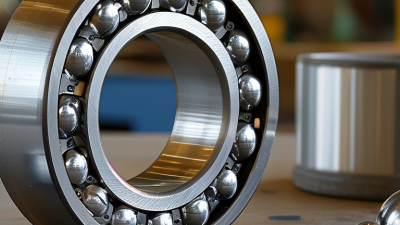
A Radial Ball Bearing is a precision machine component designed to support loads acting mainly perpendicular to a rotating shaft. It usually contains an inner ring, outer ring, hardened steel or ceramic balls, and a cage. Each part has a specific role. The rings provide raceways, while the balls roll between them with minimal sliding contact. The cage maintains spacing and helps prevent ball-to-ball collisions.
Tedric A. Harris, a respected authority on rolling-bearing analysis, wrote, “The function of a bearing is to permit relative motion while carrying the applied load.” This simple statement explains the bearing’s purpose clearly. When a motor shaft turns, the inner ring rotates with it. The balls travel along carefully formed raceways, and the outer ring remains fixed inside a housing. Lubricant forms a thin film that reduces friction, heat, and surface damage.
The principle sounds simple.
Real operation is less forgiving.
A small amount of contamination, incorrect preload, poor alignment, or insufficient lubrication can shorten service life. During practical maintenance, technicians may find fine metallic dust near a seal, unusual vibration, or a rising housing temperature. These details often reveal problems before complete failure occurs. The explanation here is useful, but not perfect. Bearing selection also depends on speed, load direction, operating temperature, sealing, and installation accuracy. Understanding these factors helps engineers choose a Radial Ball Bearing that performs reliably instead of merely fitting the shaft.
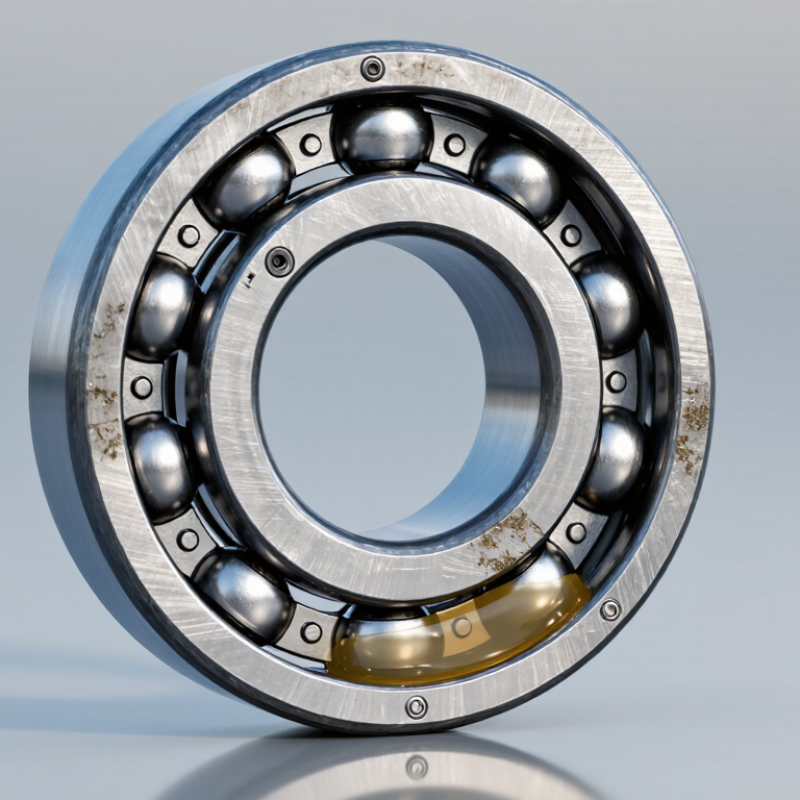
A radial ball bearing supports loads that act perpendicular to a rotating shaft. Its basic purpose is simple: reduce friction while keeping the shaft accurately positioned. The bearing uses an inner ring, an outer ring, rolling balls, and a cage. As the shaft turns, the balls roll between both rings instead of sliding. This reduces heat, wear, and mechanical resistance in motors, pumps, fans, and gear systems.
ISO 281:2007 defines the L10 basic rating life as the number of revolutions that 90% of identical bearings can complete under stated conditions. That figure is useful, but it is not a promise. Real performance changes with load, speed, lubrication, sealing, alignment, and contamination. Industry failure reviews often identify poor lubrication and dirt as major causes of premature damage. A clean calculation can still mislead.
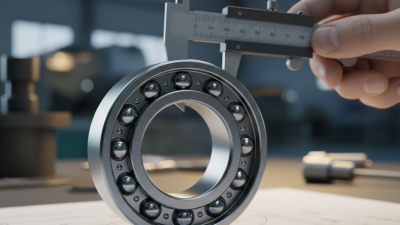
Tips: Match the bearing to the actual radial load and operating speed. Keep the shaft and housing clean during installation. Avoid striking the rings directly. Check for rough rotation, unusual noise, or rising temperature during service. Small errors matter. In practice, installation quality often deserves more attention than the catalogue rating.
| Data Dimension | Description | Typical or Key Information |
|---|---|---|
| Definition | A radial ball bearing is a rolling-element bearing designed primarily to support loads applied perpendicular to the shaft axis. | It uses hardened balls between inner and outer rings to reduce friction during rotation. |
| Basic Purpose | To guide a rotating shaft while carrying radial load and maintaining controlled alignment. | The bearing replaces sliding contact with rolling contact, reducing mechanical resistance and wear. |
| Main Components | Inner ring, outer ring, rolling balls, cage, and optional seals or shields. | The rings provide raceways, the balls transmit the load, and the cage spaces the balls evenly. |
| Load Direction | Primarily radial, with limited axial-load capability depending on bearing geometry and operating conditions. | Deep-groove designs generally accommodate combined radial and moderate axial loads. |
| How It Works | As the shaft rotates, the inner ring turns relative to the outer ring and the balls roll along the raceways. | Rolling motion creates substantially less friction than direct sliding between shaft and housing surfaces. |
| Friction Behavior | Friction is generated by rolling contact, lubricant resistance, seal drag, and small amounts of sliding within the bearing. | Proper lubrication, alignment, clearance, and loading help minimize friction and heat. |
| Common Materials | Rings and balls are commonly manufactured from hardened bearing steel; corrosion-resistant alloys and ceramic balls are also used for specialized conditions. | Material selection depends on load, speed, temperature, corrosion exposure, and electrical requirements. |
| Lubrication | Lubrication forms a protective film between contacting surfaces and helps remove heat and protect against corrosion. | Grease is common for sealed bearings; oil is often selected for higher speeds or improved heat dissipation. |
| Seals and Shields | Seals provide better protection against contaminants and retain grease, while shields reduce exposure with lower contact drag. | Open, shielded, and sealed configurations are selected according to contamination, speed, and maintenance needs. |
| Operating Speed | Radial ball bearings are widely used for low-, medium-, and high-speed rotation. | The allowable speed depends on bearing size, cage design, lubrication, load, temperature, and sealing arrangement. |
| Load Capacity | Load capacity is determined by the internal geometry, ball size and quantity, material, clearance, and operating conditions. | Higher loads generally require a suitable bearing series, correct fit, adequate lubrication, and sufficient shaft and housing support. |
| Typical Applications | Used in electric motors, pumps, fans, gear systems, conveyors, machine tools, household equipment, and rotating assemblies. | The common requirement is reliable shaft rotation with compact dimensions and relatively low friction. |
| Advantages | Low starting friction, efficient rotation, standardized dimensions, compact design, and suitability for many speed ranges. | They are generally easy to install and are available in open, shielded, and sealed configurations. |
| Limitations | They can be sensitive to contamination, misalignment, excessive shock loads, incorrect fits, and inadequate lubrication. | They may not be the best choice for very high static loads, severe impact loading, or large shaft deflection. |
| Service Life Factors | Bearing life is influenced by load magnitude, rotational speed, lubrication, cleanliness, installation quality, alignment, and temperature. | Correct selection and installation are essential for achieving the intended fatigue life and operating reliability. |
Each component has a practical duty. The inner ring transfers shaft torque into the balls. The outer ring spreads the load into the housing. The balls carry contact forces through very small areas.
The cage guides their motion and reduces collision. Seals or shields help retain grease and block dust, although they also add friction. Lubrication forms a thin protective film between metal surfaces. Too little grease causes scoring; too much can raise temperature. Small details matter.
A 2014 U.S. Department of Energy motor-systems assessment found that motor-driven equipment consumed about 68% of industrial electricity in the United States. Bearing efficiency therefore affects more than one small machine. ISO 281:2007 defines basic rating life through a calculated revolution target, commonly expressed as L10 life. It does not guarantee every bearing will reach that number. Misalignment, contamination, mounting damage, and poor lubrication can shorten service dramatically. A clean diagram can mislead. In field inspections, technicians often find grease discoloration, raceway marks, or unusual cage noise before complete failure. These clues require judgment, not just a catalog calculation.
A radial ball bearing carries loads mainly across the shaft axis. The load travels through a clear path: shaft, inner ring, balls, outer ring, then housing. Under a radial load, only several balls carry most of the force. The loaded zone sits beneath the applied force. Contact pressure rises there first.
The balls roll between raceways, replacing sliding contact with rolling contact. However, rolling does not mean zero friction. Lubricant, surface roughness, internal clearance, and misalignment still create resistance. ISO 281:2007 defines basic rating life as one million revolutions at 90% reliability. That figure describes a statistical target, not a promise for every bearing. The U.S. Department of Energy’s Motor Systems Market Assessment reports that motor-driven equipment uses about 69% of industrial electricity. Small friction losses can therefore matter across large equipment fleets.
Tips: Check the load direction before selecting a bearing. Excess clearance can increase vibration. Excess preload can increase heat. Watch the first signs: unusual noise, rising temperature, or metallic dust. Shaft alignment also deserves attention. A perfect calculation can still fail in a dirty housing.
The basic load path is simple. Real machines are not. Temperature changes, shock loads, and installation errors often upset the calculation. This is where practical inspection should challenge the design assumptions.
What Is a Radial Ball Bearing and How Does It Work?
Step-by-Step Operation During Rotation
When a radial ball bearing starts to rotate, the inner ring turns with the shaft. The outer ring usually remains seated in the housing. Small steel balls roll between two shaped raceways. This contact supports loads directed mainly across the shaft. The motion begins with rolling, not sliding, although minor sliding still occurs.
As rotation increases, the inner raceway pushes each ball forward. The balls travel around the bearing in a controlled orbital path. A cage spaces them evenly, preventing ball-to-ball contact. This spacing helps distribute the load and limit heat buildup. Meanwhile, lubricant forms a thin film between the balls and raceways. Too little lubricant raises friction. Too much can also increase temperature.
Clearance matters. Internal space allows thermal expansion and supports smooth movement. During a real inspection, a technician may feel roughness, vibration, or unusual resistance while turning the bearing by hand. These signs can indicate contamination, poor alignment, damaged raceways, or incorrect loading. A small error in shaft fit can change the contact pattern significantly. The explanation sounds simple, but bearing behavior is sensitive to real operating conditions. Temperature, speed, load direction, and installation force all influence rotation.
Step-by-step operation during rotation
The waveform shows the theoretical normalized radial contact load carried by one rolling element as it travels through one revolution. The model uses the Hertzian contact relationship Q/Qmax = max(0, cos θ)3/2, where θ is the angular position relative to the applied radial load. Contact load is highest near the load direction and falls toward zero outside the loaded zone.
The outer ring receives the radial load and transfers it to the balls at the contact points.
The balls roll between the inner and outer raceways, replacing most sliding motion with rolling motion.
Several balls share the radial load, but the balls closest to the load direction carry the greatest portion.
The cage maintains spacing between the balls as the inner ring and shaft rotate.
A radial ball bearing supports loads applied perpendicular to a rotating shaft. Its main parts include inner and outer rings, steel balls, and a cage. The balls roll between raceways, reducing sliding friction and helping the shaft rotate smoothly. Seals or shields can protect the internal lubricant from dust, moisture, and metal particles.
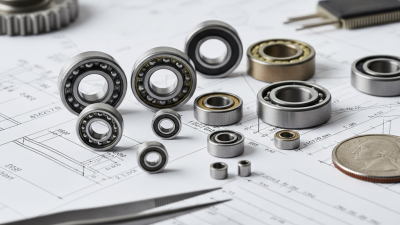
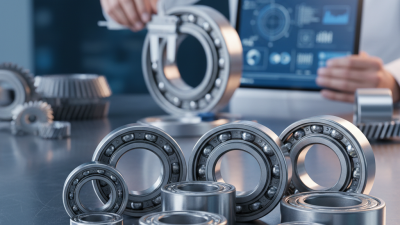
Common designs serve different operating needs. Deep-groove bearings handle radial loads and moderate axial loads, making them suitable for electric motors, fans, pumps, appliances, and conveyor systems. Flanged designs simplify positioning, while thin-section bearings save space.
Stainless steel resists corrosion in damp environments. Chrome steel usually provides strong wear resistance. Hybrid designs may use ceramic balls for lower friction and high-speed operation. Polymer cages can reduce weight, but temperature limits require careful checking.
Selection depends on load, speed, temperature, shaft fit, and contamination risk. Lubrication is not a minor detail. Too little lubricant increases heat, while too much can create drag.
Clean assembly matters greatly. A single visible particle can shorten service life. Small details matter. In maintenance practice, a technically correct bearing can still fail because of misalignment or excessive press force.
Noise often tells. It may indicate poor lubrication, damaged raceways, or an unsuitable design. Engineers should verify operating data instead of relying only on bearing size or appearance.