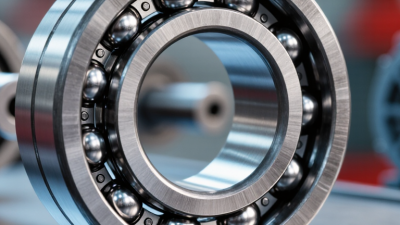
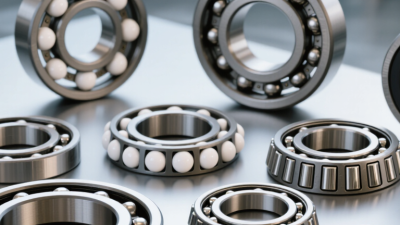
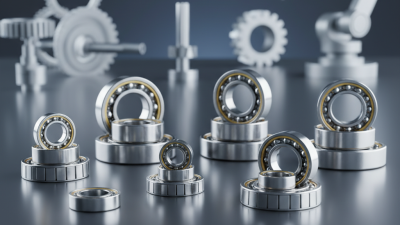
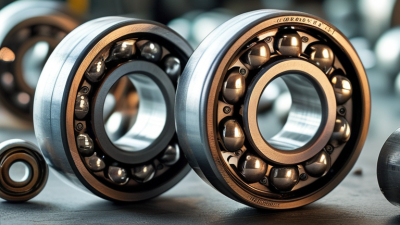
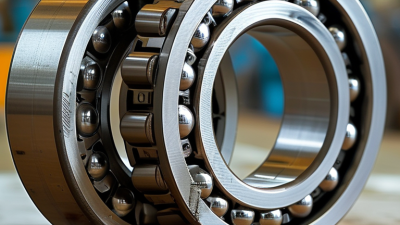
Choosing Metal Ball Bearings in 2026 is less about finding the lowest price and more about matching the bearing to its real operating conditions. A small stainless-steel bearing in a washdown pump faces different risks from a chrome-steel bearing in a high-speed electric motor. Load, speed, temperature, lubrication, contamination, and required service life all matter. The wrong choice may show up as heat, noise, vibration, or early failure.
Industry data underlines the stakes, but needs careful interpretation. Fortune Business Insights estimated the global bearings market at USD 132.6 billion in 2023 and projected growth through 2032. That figure covers multiple bearing types, not metal ball bearings alone. It signals a large, evolving market—not a guarantee that any particular material or design will suit your application. For life calculations, ISO 281 provides a recognized framework, while manufacturers such as SKF publish application guidance and product data. Check the latest edition and catalog before specifying a bearing.
A practical rule from bearing engineering is simple: “Start with the operating conditions, not the catalog number.” Treat that as a selection principle, not a verified quotation from a named expert. This guide compares steel grades, shields and seals, precision classes, load ratings, and lubrication needs. It also flags a common blind spot: nominal ratings cannot capture every real-world shock, misalignment, or maintenance gap. Sometimes the evidence is incomplete. That deserves a second look before purchase.
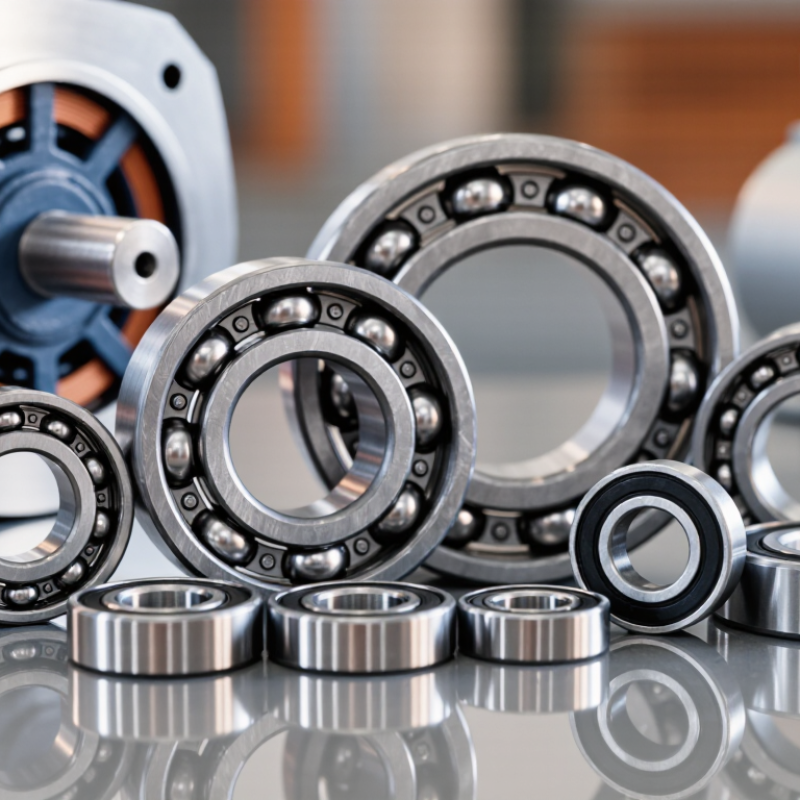
How to Choose Metal Ball Bearings in 2026?
Identify the Operating Conditions and Performance Requirements
Start with the bearing’s actual duty cycle, not just catalog ratings. Record radial and axial loads, shaft speed, operating hours, and how often the equipment starts or stops. A conveyor running steadily differs from a pump cycling every few minutes. Note nearby heat, moisture, dust, and cleaning fluids. Small details matter. A short temperature spike can shorten lubricant life, even when the average temperature seems acceptable.
Next, set measurable performance requirements. Estimate the desired service life, allowable noise, vibration limits, and available installation space. Check shaft and housing fits, since poor alignment or excessive clearance can cause early wear. Consider whether the bearing needs seals or shields to control contamination. Load calculations are useful, but real operating conditions are rarely perfectly steady. Leave a reasonable margin, and verify assumptions against equipment records or measurements where possible. A tidy spreadsheet can still miss a rough start-up.
Tips: Measure shaft speed and temperature during normal operation, then again under peak load. Keep notes. If conditions vary widely, ask a qualified engineer to review the selection before ordering.
Choosing a metal ball bearing starts with the working environment, not the catalog label. Chrome bearing steel offers high hardness and fatigue resistance for heavy, steady loads, but it needs suitable lubrication and protection from moisture. Stainless steel handles damp conditions better, though its load capacity varies by grade and heat treatment. A corrosion-resistant bearing is not automatically the strongest one. Small details matter.
Bearing design should match the direction and behavior of the load. Deep-groove bearings suit many radial loads and moderate axial loads, making them common in motors and rollers. Angular-contact designs support combined loads and benefit from correct mounting. Thrust bearings are built for axial force, not general side loading. Check speed, shaft fit, operating temperature, and available space before choosing; a bearing that fits the drawing may still run poorly if alignment is off.
Manufacturing features affect service life in ways a basic size chart cannot show. Ask about heat treatment, raceway finish, internal clearance, sealing, and lubricant type. A smooth raceway and consistent clearance can reduce noise and heat, while seals help keep dust out. There is no single best specification. It is easy to overfocus on material and overlook installation conditions, which can undo an otherwise careful selection.
How to Choose Metal Ball Bearings in 2026?
Match Bearing Size, Load Capacity, Speed, and Precision
Start with the shaft and housing dimensions, not a catalog label. A 12 mm shaft needs a matching bearing bore, but fit and operating temperature can change internal clearance after installation. Measure the shaft at several points with a micrometer. A worn or tapered seat can undermine a correct selection. Small details matter.
Compare the applied load with the bearing’s dynamic load rating, C, and equivalent load, P. ISO 281:2007 gives the basic rating-life equation for ball bearings: L10 = (C/P)³ million revolutions. If C/P equals 2, the calculated basic life is 8 million revolutions, assuming standard conditions. This is a model, not a promise; contamination, poor lubrication, and shock loads can shorten service life. Speed limits also depend on lubrication, load, and heat. Check the manufacturer’s technical data for the specific bearing, rather than relying on a generic maximum speed. For precision, ISO 492 defines dimensional and running accuracy classes. Higher precision may help control runout, but it does not raise load capacity. A neat calculation is not the whole answer. Recheck the installed fit and actual operating temperature.
| Selection factor | What to match | Practical guidance | What to verify |
|---|---|---|---|
| Bearing type | Load direction and arrangement | Deep-groove ball bearings suit mainly radial loads and can also carry limited axial loads in both directions. Angular-contact bearings support combined radial and axial loads; thrust ball bearings are designed primarily for axial loads. | Confirm load direction, axial-load direction, required number of bearings, and mounting arrangement. |
| Size and fit | Bore diameter (d), outside diameter (D), and width (B) | Measure the shaft and housing and match all three dimensions to the required bearing designation. Standardized boundary dimensions are covered by ISO 15 for many radial rolling bearings. | Check the shaft and housing tolerances, shoulder dimensions, available space, and whether the fit is appropriate for the load and temperature. |
| Load capacity | Dynamic rating (C) and static rating (C₀) | Compare calculated equivalent bearing loads with the manufacturer’s ratings for the exact bearing. Dynamic rating is used in fatigue-life calculations; static rating is used to assess permanent deformation risk under stationary or slow-moving loads. | Include radial and axial loads, shock or vibration, duty cycle, and the required service life. ISO 281 addresses dynamic load ratings and rating life; ISO 76 addresses static load ratings. |
| Operating speed | Required rotational speed and operating conditions | Use the speed limit specified for the exact bearing configuration. The permissible speed depends on bearing design, load, lubrication, cage, clearance, sealing, and heat dissipation; there is no single safe speed for a size alone. | Check the supplier’s reference or limiting speed, lubrication method, operating temperature, and whether the application needs a speed derating. |
| Precision | Running accuracy and dimensional tolerances | ISO 492 defines tolerance classes for radial rolling bearings. In general, P6, P5, P4, and P2 represent progressively tighter tolerance classes than Normal (often called P0). | Choose tighter precision only when the shaft, housing, assembly, and application require it, such as for controlled runout or high-accuracy rotation. |
| Material and environment | Corrosion exposure, contamination, and operating conditions | Through-hardened chromium bearing steel is common for general-purpose bearings. Stainless bearing steel can improve corrosion resistance, but its suitability depends on the specific grade and environment. | Consider moisture, chemicals, washdown, temperature, and contamination. Stainless steel does not make every bearing suitable for every corrosive environment. |
| Clearance | Internal radial clearance and temperature-related expansion | Normal clearance is suitable for many standard conditions. C3 clearance is greater than Normal; other clearance groups are available for specific operating and fit conditions. | Account for interference fits, temperature differences, and operating load. Greater clearance is not a precision grade and is not automatically preferable. |
| Lubrication and sealing | Grease or oil, contamination control, and maintenance plan | Sealed or shielded bearings can help retain lubricant and limit contaminant entry. Open bearings allow more flexible relubrication but need an appropriate external protection and lubrication arrangement. | Confirm seal type, lubricant compatibility, relubrication needs, operating temperature, and the effect of seals on friction and speed. |
| Final selection check | Complete bearing designation and application requirements | Evaluate size, load, speed, precision, clearance, material, lubrication, and mounting as a complete system rather than selecting by bore diameter alone. | Use the exact bearing’s technical data and validate the choice under the application’s real load, speed, temperature, and service-life requirements. |
A bearing beside a washdown line faces a different risk from one inside a dry, dusty fan housing. Map temperature, moisture, dust, speed, and load before choosing lubricant or seals. A stainless-looking surface alone does not prevent water from reaching the raceway. Small details matter.
Match lubricant viscosity to operating speed and temperature, not just the room’s conditions. Grease may suit sealed, low-maintenance assemblies; circulating oil can help manage heat in faster or heavily loaded systems. The U.S. Department of Energy’s Operations & Maintenance Best Practices Guide identifies lubrication and contamination control as core equipment-reliability practices. For oil systems, ISO 4406:2021 provides a particle-cleanliness code; each code increase represents roughly twice the particle concentration. That makes filter targets measurable.
Then check protection against the actual contaminant. Contact seals can resist splashes and fine dust, but may add friction and heat; shields offer less resistance to liquid ingress. Confirm grease compatibility before relubricating, and set intervals using measured temperature, noise, and lubricant condition where practical. These checks are imperfect. A clean sample does not prove the bearing’s inner surfaces are dry, so inspect after early service if moisture exposure is severe.
A metal ball bearing should match the machine, not just the catalogue description. Check bore, outside diameter, width, clearance, load, and operating speed against the equipment’s requirements. Small details matter. Confirm which dimensional and performance standards apply, then ask for current certificates and test records. Check that the documents identify the bearing type and production batch; a generic certificate is less useful.
Supplier quality shows up in repeatable details. Ask how incoming steel, heat treatment, and finished dimensions are controlled. Review inspection records, traceability, and the process for handling defects. If possible, inspect a sample for smooth rotation, clean surfaces, and consistent dimensions. Check the batch. A polished sample alone proves little, so compare it with the paperwork and agreed specifications. I still find this step easy to rush when a replacement is urgent.
Maintenance needs should shape the choice, too. Consider lubricant type, relubrication access, seals, dust, moisture, and expected temperature. A bearing near a washdown area may need different protection from one inside a clean, enclosed gearbox. Set inspection intervals using the maker’s guidance and actual operating conditions, then record noise, heat, and vibration trends. The schedule may need adjustment after installation; real machines rarely behave exactly like a neat spreadsheet.