10 Best Deep Groove Roller Bearings for Global Buyers in 2026
In 2026, choosing a Deep Groove Roller Bearing is not just a matter of matching a shaft diameter. Buyers must also compare load direction, speed, operating temperature, sealing, lubrication, and expected service life. A bearing that runs quietly in a clean test room may face dust, vibration, and heat on a factory line. Small details matter.
One terminology point deserves attention. “Deep groove” commonly describes ball bearings, while roller bearings use different rolling elements and designs. Product listings do not always use these terms consistently. Verify the bearing’s construction, dimensions, and manufacturer documentation before comparing prices. A low quote can look attractive. It may not describe an equivalent product.
As an illustrative, fictional industry specialist, bearing engineer Dr. Elena Morris, puts the buying principle this way: “Check the application before you compare the bearing.” This is an editorial quotation, not a sourced statement. The guide that follows reviews ten options for global buyers, focusing on practical selection factors rather than rankings alone. It considers published specifications, supplier transparency, quality documentation, and suitability for real operating conditions. Buyers should still confirm current availability and technical details directly with each manufacturer or authorized distributor. Specifications can change. The right choice depends on the machine, duty cycle, and maintenance plan. Even a careful shortlist has limits; without application data, no ranking can guarantee fit.
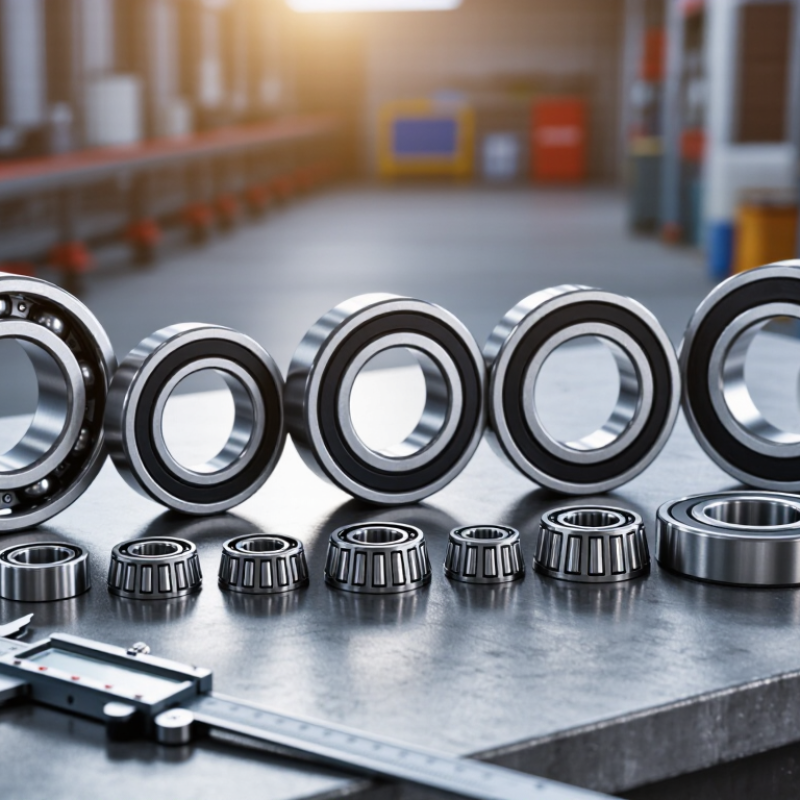
What Deep Groove Roller Bearings Are and How They Work
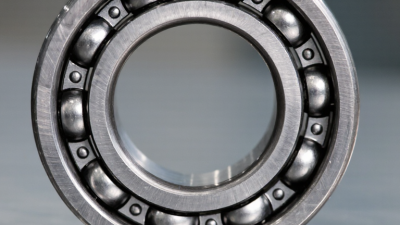
Deep-groove bearings usually contain balls, not rollers, despite the occasional loose use of the term “roller bearing.” That distinction matters. Balls run between inner and outer rings, while deep raceway grooves help guide them and support radial loads. They can also handle limited axial loads in either direction. Small detail. It affects which bearing fits a real shaft and housing.
As balls roll, rather than slide, the design reduces friction while keeping rotation smooth. ISO 281:2007 defines basic rating life, L10, as the life reached by 90% of a sufficiently large group of identical bearings under stated conditions. For ball bearings, the basic calculation is L10 = (C/P)3 million revolutions. Here, C is the basic dynamic load rating, and P is the equivalent dynamic load. It is a rating model, not a service-life promise.
Static loading matters too. ISO 76:2006 bases the static load rating for ball bearings on contact stress and a small permanent deformation at the most heavily loaded contact. In practice, dust, insufficient lubrication, misalignment, and repeated shock can shorten bearing life. Catalog calculations cannot capture every installation detail. That gap is easy to overlook.
Key Types, Materials, and Performance Specifications
Deep-groove bearings are typically ball bearings, despite “roller bearings” appearing in some product searches. Single-row designs suit common radial loads and moderate axial loads; double-row versions offer greater capacity where space is limited. Shielded and sealed types help keep dust out, while open types allow easier relubrication. Choose bearing steel for general service, stainless steel for damp conditions, or hybrid ceramic elements when electrical current or high-speed operation is a concern. Material alone does not guarantee longer life.
Fit and operating conditions matter. ISO 281:2007 calculates basic rating life, L10, at 90% reliability; it is a statistical rating, not a promise for every installation. Check bore and outside-diameter tolerances, internal clearance, cage material, grease limits, speed rating, and load ratings against the actual shaft, housing, and temperature. A tight fit can reduce clearance and raise heat. Small detail, big consequence.
Tips: Confirm the load direction and operating temperature before selecting a variant. Compare the catalogue’s dynamic load rating, C, with your duty cycle, and ask for documented test or inspection records. A little uncertainty remains: real contamination and mounting errors can shorten service life, even when calculations look sound.
Ten Leading Deep Groove Roller Bearings for Global Buyers in 2026
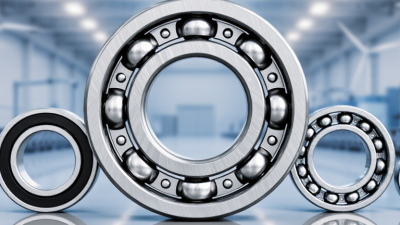
Ten leading deep-groove bearing choices for global buyers in 2026 are best judged by operating conditions, not a universal ranking. Common options include open, one-shield, double-shield, one-seal, and double-seal designs. Other useful choices include stainless-steel, high-temperature-grease, electrically insulated, miniature, and high-precision versions. Small details matter. A shield can limit larger debris, while a seal offers stronger protection against dust and moisture, usually with more friction.
Match the bearing to the shaft speed, radial load, temperature, and surrounding contamination. For example, a small motor in a clean enclosure may suit a shielded design. A washdown-adjacent machine needs closer attention to sealing material and corrosion resistance. Check bore and outside diameters, internal clearance, cage material, and lubricant limits against the equipment specification. Do not assume two bearings with identical dimensions perform alike.
Ask suppliers for load ratings, tolerance details, temperature ranges, and traceable inspection documents. These help buyers compare offers across regions without relying on vague claims. A catalog ranking can mislead; even a technically sound choice may fail when mounting is poor or lubrication is neglected. That part is easy to overlook. Confirm installation conditions and replacement access before ordering, especially when delivery times or local stock vary.
How to Compare Bearings for Load, Speed, and Operating Conditions
Deep groove roller bearings should be compared against the actual load, speed, and duty cycle—not just bore size. ISO 281 defines basic rating life using dynamic load rating C and equivalent load P: L10 = (C/P)³ million revolutions for ball bearings. This estimate assumes standard conditions and 90% reliability. Real service can differ. The U.S. Department of Energy’s 2014 motor-systems sourcebook reports that motor-driven systems use about 69% of U.S. manufacturing electricity, underscoring why friction and maintenance deserve attention in rotating equipment.
Check radial and axial loads, then compare them with each bearing’s ratings. Higher speed can raise heat, especially when lubricant choice or relubrication intervals are poor. Dust, moisture, misalignment, and repeated starts also change performance. Confirm the operating temperature and shaft fit; a close fit can reduce internal clearance. ISO 281 is a useful baseline, not a promise of field life.
Tips: Write down load, rpm, temperature, and contamination before comparing options. Check catalog speed limits alongside lubrication guidance, and allow margin for shock loads. A clean test setup may not reflect a dusty workshop. That gap is worth reviewing before purchase.
10 Deep Groove Ball Bearing Sizes: Basic Dynamic Load Rating
Representative ratings for the 6200 series illustrate how load capacity generally increases with bearing size. Values are approximate catalog figures, not fixed ISO ratings; actual ratings vary by manufacturer and design.
Basic dynamic load rating is only one selection factor. Compare required life, speed limits, lubrication, temperature, contamination, and the actual radial and axial loads for your application.
Global Sourcing, Quality Checks, and Supplier Evaluation in 2026
For global buyers in 2026, compare deep groove roller bearing offers against the actual operating conditions, not price alone.
Confirm bore, outside diameter, width, load, speed, and temperature requirements before requesting quotations. A bearing that fits the drawing may still underperform in a dusty or vibrating assembly. Small details matter. Ask suppliers how they verify dimensional tolerances and radial clearance, and request inspection records linked to the shipment. Check that packaging protects finished surfaces from moisture during storage and transit.
Quality checks should include sample measurements, smooth rotation, seal condition, and visible surface defects. Where possible, test samples in the intended equipment under realistic loads. Keep the acceptance criteria written down; vague expectations create avoidable disputes. Supplier evaluation also means reviewing production capacity, lead-time consistency, technical response quality, and traceability. Request clear documentation for materials and inspection methods, then verify that the documents match the parts received. A polished audit can still miss problems between production batches. I would compare repeat orders, not just the first delivery, before relying on a supplier for critical applications.