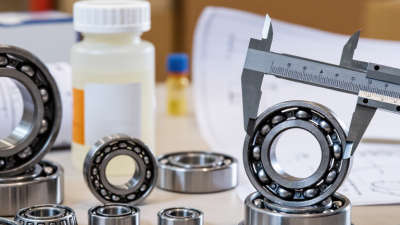
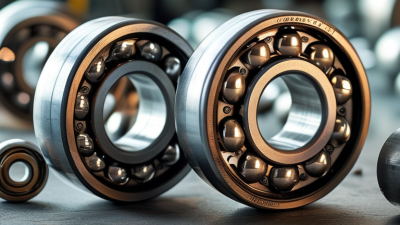
Choosing the right Stainless Steel Bearings begins with the application, not the catalog photograph. A bearing inside a food-processing conveyor faces washdown, cleaning chemicals, moisture, and strict hygiene demands. A bearing supporting a high-speed spindle faces heat, vibration, lubrication limits, and dimensional accuracy. These conditions can make the same bearing successful in one machine and unreliable in another.
Bearing specialist Dr. Peter J. Blau has emphasized a practical engineering principle: “Material choice must follow the load, speed, lubrication, and environment—not habit.” This perspective matters because “stainless steel” describes a family of materials, not one universal solution. Hardened AISI 440C often provides strong wear resistance and useful corrosion protection. Austenitic grades, such as 316, resist harsher chemicals better but may offer lower hardness and load capacity. Ceramic balls, hybrid designs, seals, cages, and internal clearance also change performance.
Small details matter.
This guide examines how to compare load ratings, operating speed, temperature, corrosion exposure, shaft fit, lubrication, and sealing. It also explains where Stainless Steel Bearings may outperform standard chrome-steel bearings, and where their higher cost may not be justified. Engineers should verify the real operating conditions, including occasional overloads and cleaning cycles. Published data can differ between manufacturers. That is easy to overlook.
A careful selection may extend service life, reduce unplanned maintenance, and protect product quality. Yet no bearing eliminates poor alignment, contamination, or inadequate lubrication. The best choice remains a balance between material capability, installation accuracy, maintenance access, and the consequences of failure.
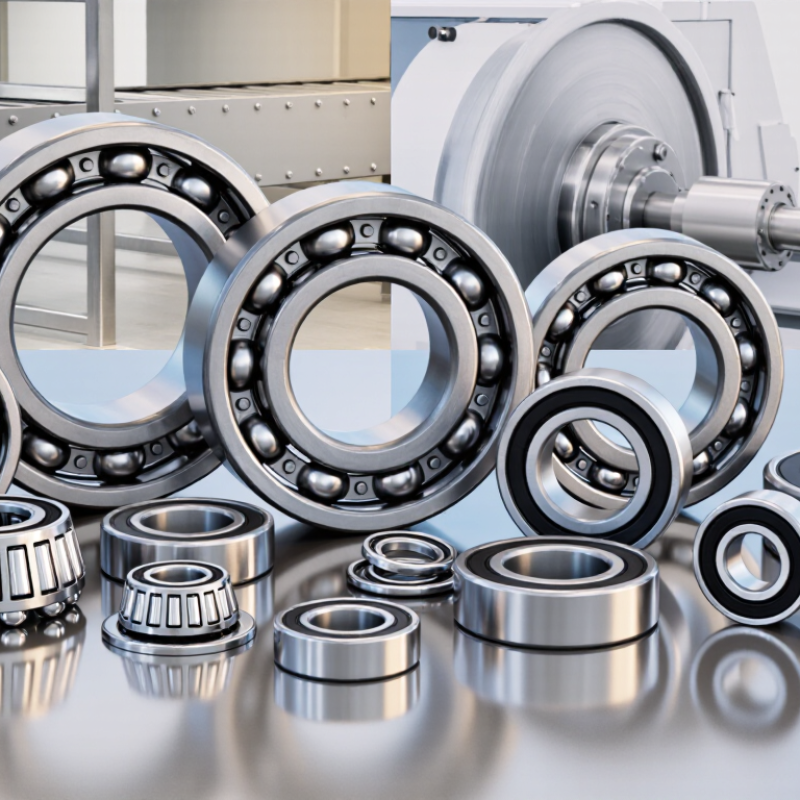
Selecting a stainless steel bearing begins with the operating environment, not the catalog material. Record temperature, speed, radial and axial loads, moisture, chemicals, cleaning methods, and duty cycles. A food-processing shaft may face water jets, alkaline detergents, and repeated starts. A laboratory actuator may need low noise and stable torque instead.
Use ISO 281:2007 to estimate basic rating life from the bearing’s dynamic load rating and applied load. Do not treat the calculated hours as a promise. Contamination, poor alignment, and insufficient lubrication can shorten real life sharply. The U.S. Department of Energy’s Operations & Maintenance Best Practices Guide reports that preventive maintenance can reduce costs by 12–18% compared with reactive maintenance. That supports routine checks for corrosion stains, rising vibration, unusual heat, and seal damage.
Specify performance limits in measurable terms. State the continuous and peak temperature, target speed, required service life, allowable noise, and static safety factor. For washdown equipment, corrosion resistance may matter more than maximum load capacity. However, “stainless” is not automatically chemical-proof. Chlorides, acidic cleaners, and trapped moisture still demand careful material and seal selection. A clean-looking test bench can mislead. Test the bearing under the actual cleaning cycle, load, and speed whenever possible. Field inspections often find that clearance or lubrication was the overlooked variable. That small mistake can dominate the result.
Corrosion resistance starts with the bearing’s environment, not its appearance. Austenitic 304 stainless steel typically contains about 18% chromium and 8% nickel. It performs well in clean, indoor, and mildly humid areas.
Grade 316 adds roughly 2–3% molybdenum, improving resistance to chlorides and salt spray. This matters near seawater, washdown systems, and coastal air. ISO 9223 classifies atmospheric corrosion into six categories, from very low to extreme. Match the bearing to the site, not just the catalog description.
Martensitic 440C stainless steel offers high hardness and wear resistance. However, its corrosion resistance is usually lower than 304 or 316. It may suit dry machinery better than damp processing equipment. ASTM G48 testing can compare pitting resistance, but results depend on temperature, solution, and test method. Do not treat one laboratory number as a complete field prediction.
The NACE IMPACT study estimated global corrosion costs at about 2.5 trillion US dollars annually, equal to 3.4% of global GDP. That figure shows why material selection deserves engineering review.
Tips: Check chloride exposure, cleaning chemicals, temperature, load, and lubrication. Inspect real operating surfaces for red staining or rough raceways. A common shortcut is choosing 316 for every wet application. That can still fail when crevices, contamination, or poor maintenance concentrate chlorides. Verify the required grade, seals, and tolerances with current ASTM and ISO documentation.
How to Choose Stainless Steel Bearings for Your Application
Select the Bearing Design, Size, Load Capacity, and Speed Rating
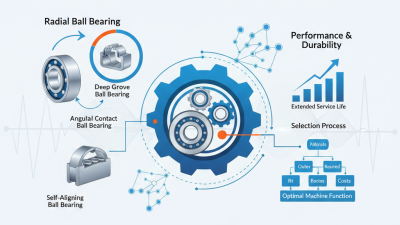
Stainless steel bearings are not chosen by corrosion resistance alone. In field inspections, washdown exposure, misalignment, and intermittent loads often change the decision. Select the design around the motion. Deep-groove bearings suit radial loads, while angular-contact designs manage combined radial and axial forces. For oscillating movement, avoid assuming a standard raceway will survive. ISO 281 defines rating-life calculations, but contamination and poor lubrication can reduce real service life sharply. Laboratory numbers are not shop-floor guarantees.
Size the bearing from shaft diameter, housing constraints, and calculated load. Do not select it from a catalog gap. Start with the load. Use ISO 76 static-load methods when shock or stationary loading matters. A bearing with a higher dynamic rating can still fail early if the shaft deflects. Check fit, internal clearance, seals, and cleaning chemicals together. That detail is easy to miss. For wet-process equipment, corrosion resistance helps, but it does not replace compatible lubricant and drainage.
Speed rating deserves equal attention. Compare continuous speed, acceleration, duty cycle, and temperature with the stated limits. The U.S. Department of Energy reports that motor-driven systems consume more than half of industrial electricity, making friction worth investigating. Lower friction may reduce heat, but overspecifying speed can increase cost without benefit. ISO 281 calculations are useful, yet I would validate them with temperature and vibration readings after installation. Measure, then revise. Early data sometimes proves the original selection was too optimistic.
Select the bearing design, size, load capacity, and speed rating by comparing representative stainless steel deep-groove bearing sizes.
Larger bearing sizes generally provide higher dynamic load capacity, while smaller bearings typically allow higher operating speeds. The values shown are representative engineering values for stainless steel deep-groove bearings with common 10 mm bore sizes; verify final load, speed, lubrication, temperature, and corrosion requirements against the selected bearing specification.
Stainless steel bearings suit washdown zones, food equipment, marine fixtures, and humid production lines. However, stainless steel does not make a bearing maintenance-free. Select the seal before selecting the lubricant. Rubber contact seals block water and fine dust, but they increase friction and heat. Non-contact shields run cooler, yet they offer weaker contamination protection. In my field experience, a sealed bearing often survives longer than an open bearing in dirty environments. Still, this assumption can fail when cleaning chemicals attack the seal material.
Lubrication needs equal attention. Use a grease compatible with the seal, operating temperature, and cleaning agents. ASTM D4950 classifies automotive service greases, but industrial applications may require food-grade or water-resistant formulations. Do not overfill the housing. Excess grease creates heat and may shorten service life. ISO 281 defines L10 life as the point where 90% of identical bearings are expected to survive. That figure is useful, not absolute. Poor alignment can destroy the calculation.
Tolerance and installation also influence performance. ISO 199 specifies bearing tolerance classes, while tighter fits can reduce internal clearance. Measure the shaft and housing; do not force a bearing into place with impact. Apply mounting pressure only to the fitted ring. I have seen new bearings fail after careless hammering. That mistake is avoidable. Check shaft runout, shoulder squareness, and final rotation by hand before commissioning. Temperature, noise, and vibration should be recorded during the first operating hours.
Choosing stainless steel bearings starts with the application, not the material label. Check radial and axial loads, shaft speed, operating temperature, and exposure to water or cleaning chemicals. Stainless steel resists corrosion, but it is not automatically corrosion-proof. Chlorides, acidic cleaners, and trapped moisture can still cause pitting. Measure the shaft and housing accurately. A small fit error may create noise, heat, or premature wear.
Maintenance requirements should match the working environment. In food-processing or washdown areas, select suitable seals and confirm that lubricants tolerate frequent cleaning. In dusty equipment, sealed bearings can reduce contamination, but seals may increase friction at higher speeds. Keep a simple inspection record. Note vibration, unusual sound, temperature changes, and lubricant condition. Small changes matter. Do not rely on appearance alone.
Service life depends on more than the bearing’s calculated rating. Recheck loads during startup, shock events, and uneven operation. I have seen service estimates fail because engineers used steady loads only. That mistake is easy to repeat. Allow for mounting errors, contamination, electrical damage, and poor lubrication. A conservative life estimate is often more useful than an impressive number. If the bearing runs hotter than expected, stop and investigate the cause before increasing lubrication. That response may protect the shaft, housing, and surrounding equipment.