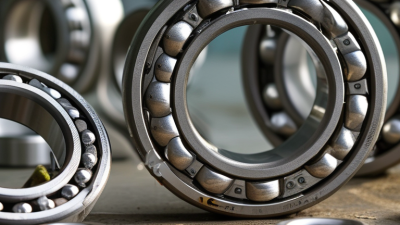
Stainless Steel Bearings are often chosen for environments where moisture, washdown, or light chemical exposure makes corrosion resistance important. Yet “stainless” does not mean maintenance-free, universally corrosion-proof, or suitable for every load. Buyers still need to compare steel grade, heat treatment, seals, lubrication, clearance, and operating temperature. A bearing beside a food-processing rinse line faces different conditions from one inside a marine pump. Small details matter.
Market context also deserves careful reading. Fortune Business Insights’ global bearing market coverage and SKF’s 2024 annual reporting describe a broad, evolving bearing sector, but neither should be treated as a direct measure of stainless-bearing demand. Their market categories and reporting scopes differ. That distinction is easy to miss. For global buyers, the useful question is not simply which product ranks first, but which documented specification fits the machine, service conditions, and supply requirements. ISO 281 provides a recognized framework for calculating dynamic load ratings and rating life; it does not, by itself, verify corrosion performance or suitability for a particular washdown process. This guide compares leading options through those practical limits, alongside traceable product data and supplier support. Some comparisons will remain imperfect, because published specifications do not capture every real-world installation. That is worth remembering.
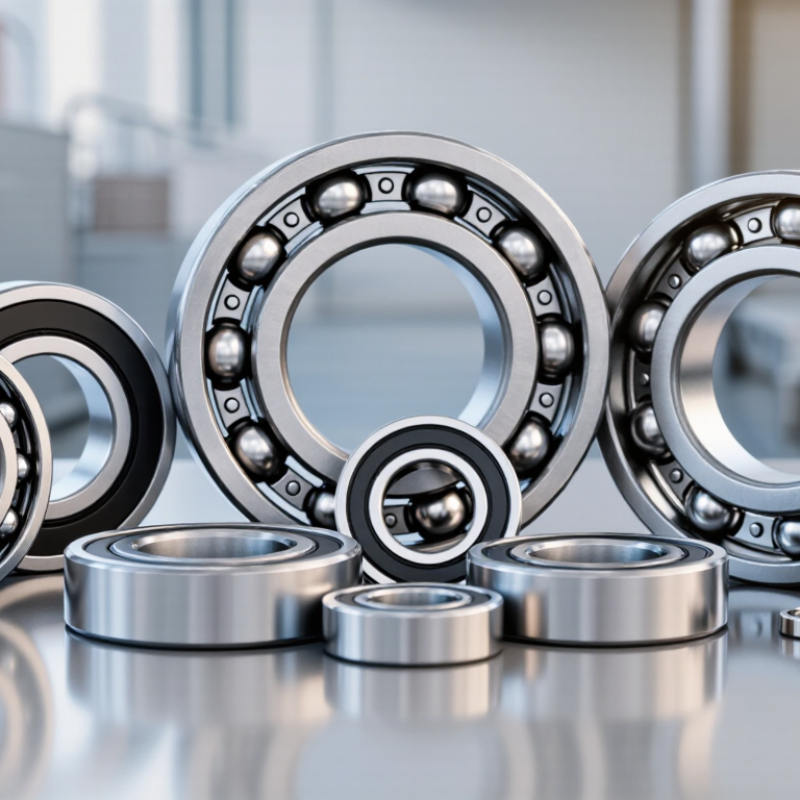
Stainless bearing choice starts with the grade, not the catalog photo. AISI 440C contains about 16–18% chromium and can reach high hardness after heat treatment. It suits high loads, clean environments, and moderate moisture. Yet, it can lose corrosion resistance after grinding or poor passivation. That detail is often missed.
AISI 304 typically contains 18–20% chromium and 8–10.5% nickel, according to ASTM A276 chemistry ranges. It offers practical resistance for indoor equipment, food-handling areas, and general washdown. AISI 316 adds roughly 2–3% molybdenum, improving resistance to chlorides and salt exposure. It is the safer option near coastal air, but not automatically the strongest bearing material. World Stainless reported about 58.4 million tonnes of global stainless crude steel production in 2023, showing the scale of this material family, not proof that every grade fits bearing duty.
Tips: Match the grade with load, speed, temperature, and contamination. Check hardness data, seal material, and lubricant compatibility. For chloride exposure, 316 may still fail without proper cleaning. For precision machinery, 440C can be better, even when the room feels humid. Small details matter.
One practical warning remains. “Stainless” does not mean rust-proof. Surface finish, heat treatment, clearance, and installation errors can change real service life. I would request mill certificates and test evidence before approving large shipments. The cheapest grade is sometimes the most expensive mistake.
For global buyers, stainless steel bearing selection starts with material data, not appearance. 440C stainless steel typically reaches 58–62 HRC after proper heat treatment. This hardness supports high load capacity, wear resistance, and stable performance in precision applications. It suits shafts, instruments, pumps, and equipment exposed to moderate moisture. However, hardness does not guarantee corrosion protection in every environment. Poor heat treatment can also reduce toughness and create inconsistent results.
316L stainless steel offers stronger corrosion resistance because of its low carbon content and molybdenum addition. It performs well around salt spray, cleaning chemicals, humid air, and food-processing conditions. Yet 316L is softer than hardened 440C, so it may wear faster under heavy loads or contaminated lubrication. That trade-off matters. Corrosion resistance is not the same as unlimited durability.
I have seen buyers compare only HRC values and overlook the operating environment. A certificate alone is not enough. Ask for heat-treatment records, hardness testing methods, dimensional inspection, and corrosion test conditions. Check whether the bearing will face vibration, washdown cycles, or abrasive dust. In real procurement work, stainless grades can perform differently despite similar product descriptions. Some decisions remain imperfect because duty cycles are estimated, not measured. A small field trial can reveal noise, rust staining, or early wear before a large order is approved.
| Material Option | Typical Chemical Composition (wt.%) | Typical Hardness | Corrosion Resistance | Magnetic Behavior | Common Bearing Advantages | Typical Application Environment |
|---|---|---|---|---|---|---|
| AISI 440C Stainless Steel | C 0.95–1.20; Cr 16–18; Mo ≤0.75; Mn ≤1.00; Si ≤1.00 | 58–62 HRC after hardening and tempering | Good in fresh water, humidity, and mild atmospheric conditions; lower resistance to chlorides and acidic media than 316L | Magnetic | High hardness, high wear resistance, good rolling-contact fatigue performance, and suitable for precision raceways | General industrial equipment, pumps, food-processing machinery, medical mechanisms, and moderately corrosive environments |
| AISI 316L Stainless Steel | C ≤0.03; Cr 16–18; Ni 10–14; Mo 2–3; Mn ≤2.00; Si ≤1.00 | Typically ≤95 HRB or approximately 150–220 HV in the annealed or lightly cold-worked condition; not normally heat-hardenable | Excellent resistance to atmospheric corrosion and improved pitting resistance in chloride-bearing environments due to molybdenum | Generally non-magnetic when annealed; cold working may increase magnetic response | Strong corrosion resistance, low carbon content for improved weld-related corrosion performance, and good cleanability | Marine equipment, chemical-processing systems, medical and laboratory equipment, washdown areas, and humid coastal environments |
| 17-4 PH Stainless Steel | C ≤0.07; Cr 15–17.5; Ni 3–5; Cu 3–5; Nb + Ta 0.15–0.45 | Approximately 28–44 HRC, depending on aging condition H900–H1150 | Good general corrosion resistance; typically below 316L in severe chloride or chemical exposure | Magnetic | High strength, good dimensional stability, and adjustable mechanical properties through precipitation hardening | Aerospace mechanisms, high-strength industrial equipment, valves, pumps, and applications requiring strength with moderate corrosion resistance |
Selection note: 440C is generally preferred when high hardness and wear resistance are the primary requirements. 316L is generally preferred when corrosion resistance, frequent washdown, or chloride exposure is more important than maximum bearing hardness. Actual bearing life also depends on load, speed, lubrication, clearance, heat treatment, surface finish, and sealing.
For global buyers, ISO 492 P6 describes tighter dimensional and running accuracy than normal bearing tolerance. It is often compared with ABEC 3, but the systems are not perfectly interchangeable. Their measurement rules and published limits can differ. Check the manufacturer’s tolerance table, not just the label.
Fit matters. A P6 stainless steel bearing may suit a motor or compact pump where shaft alignment and smooth rotation are important. Still, P6 does not guarantee a quieter bearing or longer service life. Load, lubrication, seals, and mounting conditions matter too. Small details count. During inspection, compare bore and outside diameter measurements with the drawing, and confirm the required clearance separately. Stainless steel describes material choice, not precision grade. One sourcing mistake is assuming that every P6 listing includes the same cage, seal, or internal clearance. It may not. Ask suppliers for inspection records and clarify which standard edition they use; this makes comparisons more reliable, even when catalog language is brief.
For stainless steel bearings, dynamic load rating C is a useful starting point, not a buying decision by itself. Compare it with the equivalent dynamic load P expected in service. Under ISO 281:2007, the basic rating life for ball bearings is L10 = (C/P)³ million revolutions. In practical terms, doubling P cuts calculated life to one-eighth, assuming the model’s operating conditions apply. A compact bearing carrying a fluctuating load may therefore need more capacity than its static appearance suggests. Check actual load direction, shock, and duty cycle.
Speed limits need equal scrutiny. There is no single safe RPM for every stainless bearing: lubrication method, cage design, seals, internal clearance, and heat removal all matter. Review the supplier’s limiting-speed data alongside the operating temperature and lubricant guidance, then allow margin for start-stop cycles. A bearing rated for high speed on paper may run hot inside a poorly ventilated housing. That detail is easy to miss. ISO 281 life calculations also do not capture every real-world factor, including contamination and misalignment. Treat C/P life as a comparison tool, not a service-life promise, and verify the selection under the actual application conditions.
For global buyers, a stainless bearing’s paperwork matters as much as its polished raceway. ASTM A276 covers stainless steel bars and shapes; it is not, by itself, a finished-bearing performance specification. ISO 683-17 addresses bearing steels and their delivery conditions. Check the exact grade, heat treatment, hardness, and inspection requirements against the purchase order. Ask for a material test certificate tied to the heat number, then match that number to the bearing or its packaging. Small mismatch, big headache.
Seals need equally specific checks. Confirm material, temperature range, lubricant compatibility, and whether the application faces water, dust, or washdown. A seal marked “contact” or “non-contact” tells only part of the story. The International Stainless Steel Forum reported 58.4 million tonnes of global stainless crude steel production in 2023. That scale does not guarantee consistent bearing quality; traceability and documented inspection still matter.
Tips: Request the certificate, drawing, seal specification, and inspection record before shipment. Compare markings on the bearing, label, and paperwork. Ask suppliers how they handle mixed production lots. Honestly, buyers sometimes focus too much on alloy names and too little on fit, clearance, and operating conditions. A sample inspection can catch that gap early.